
Athens, the city we run the trips from
Most itineraries give Athens a night and a morning at the Acropolis before the first ferry. We live here, and we think the city deserves more: the Acropolis with a guide who can read the stones, a museum built to hold what came down from it, and neighborhoods where dinner starts at nine and the tables are still full at eleven.
With a licensed guide
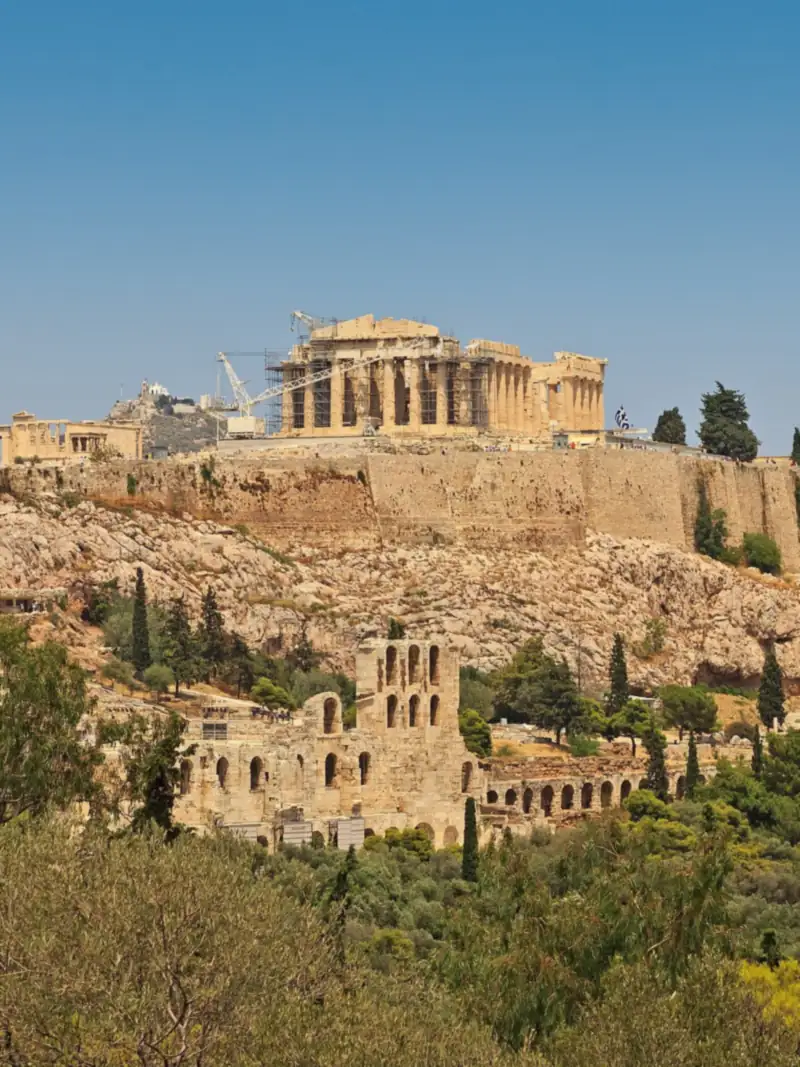
The Acropolis is a rock with a lot of people on it. With a licensed guide you walk up knowing what you’re looking at: why the Parthenon’s columns lean inward, where Athena’s olive tree stood, why six women hold up the porch of the Erechtheion. Then the Acropolis Museum, where the guide stands you in front of the frieze and explains what’s missing and where it is.
Two days in Athens
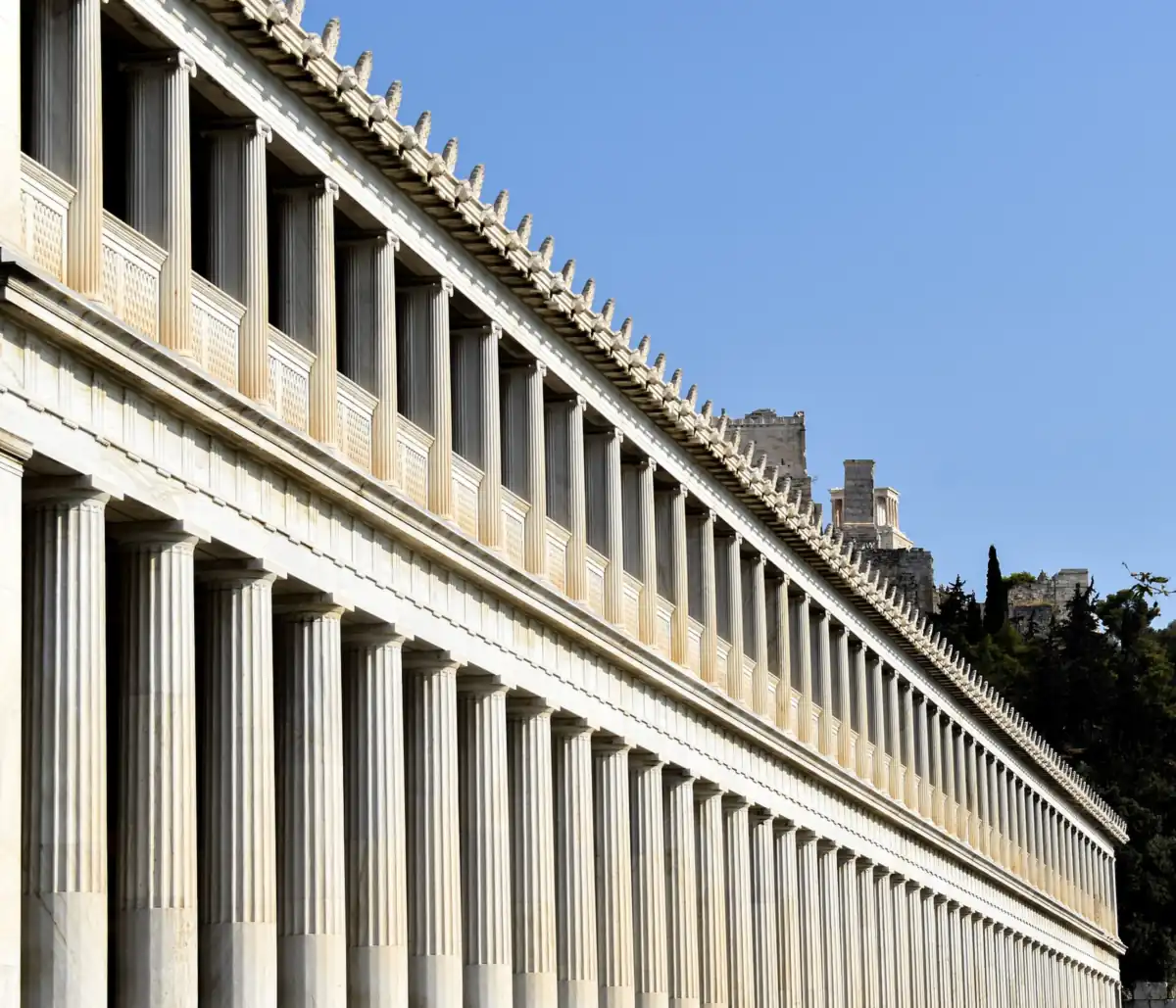
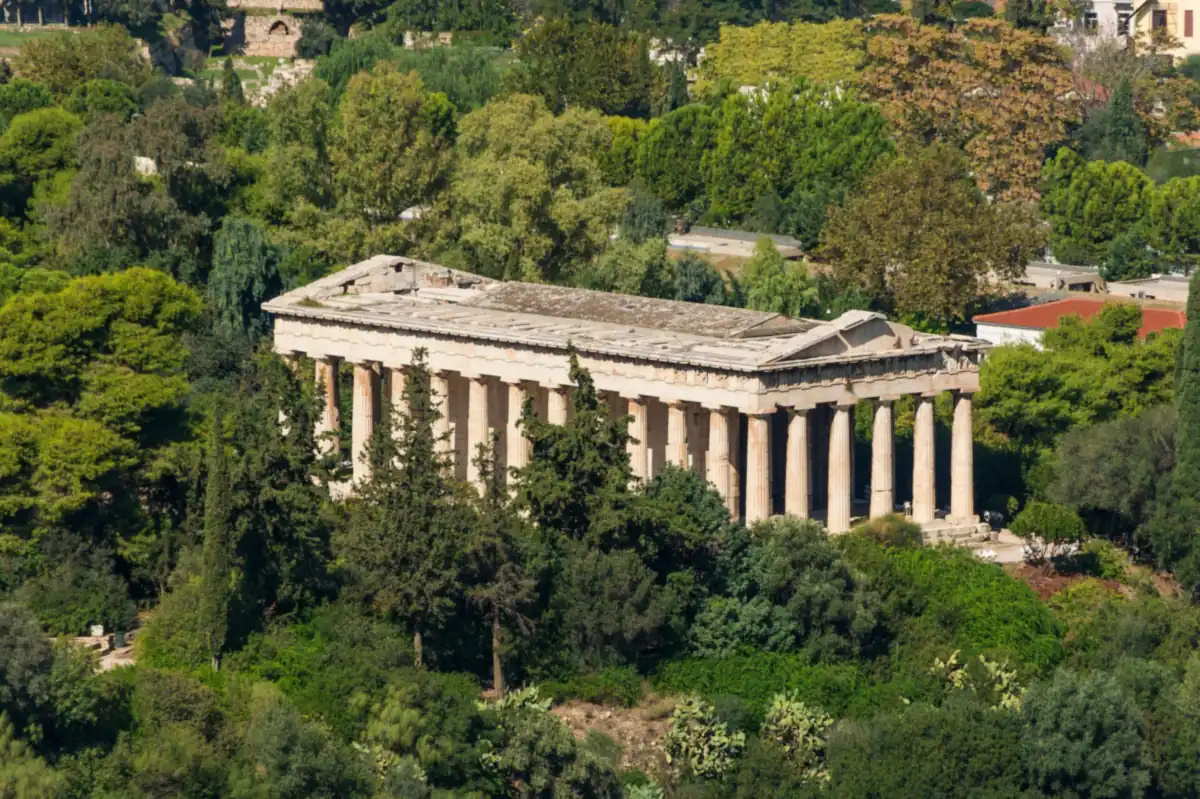
The first morning is the Acropolis early, before the heat and the cruise groups, then down through Plaka to the Ancient Agora, where the Temple of Hephaestus has kept all of its columns since the 5th century BC. The afternoon is yours: the Central Market on Athinas Street if you like food, the National Archaeological Museum if you like gold masks, a coffee in Koukaki if you like neither. Dinner is a walk away in Psyrri or under the Acropolis in Plaka.
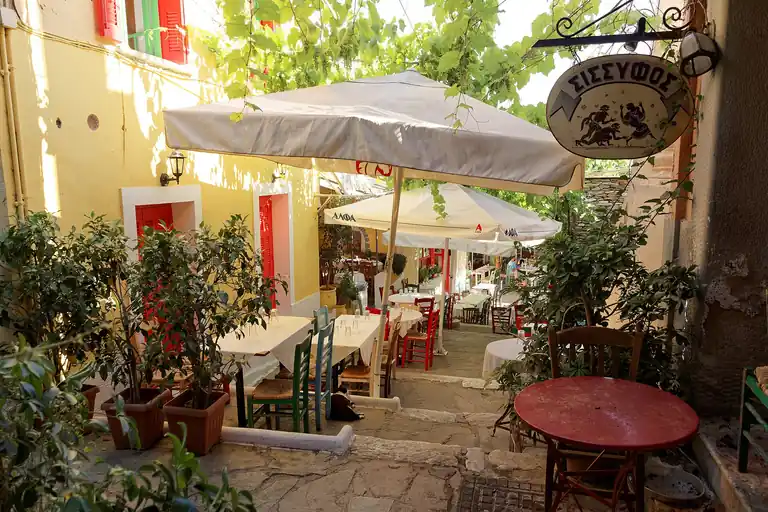
The second day is for the city’s other side: Anafiotika, a Cycladic village of whitewashed houses built on the slope of the Acropolis by workers from the island of Anafi; the flea market at Monastiraki; the hill of Philopappos for the view back across to the Parthenon at sunset. The program for each departure is published with its dates.
When to go
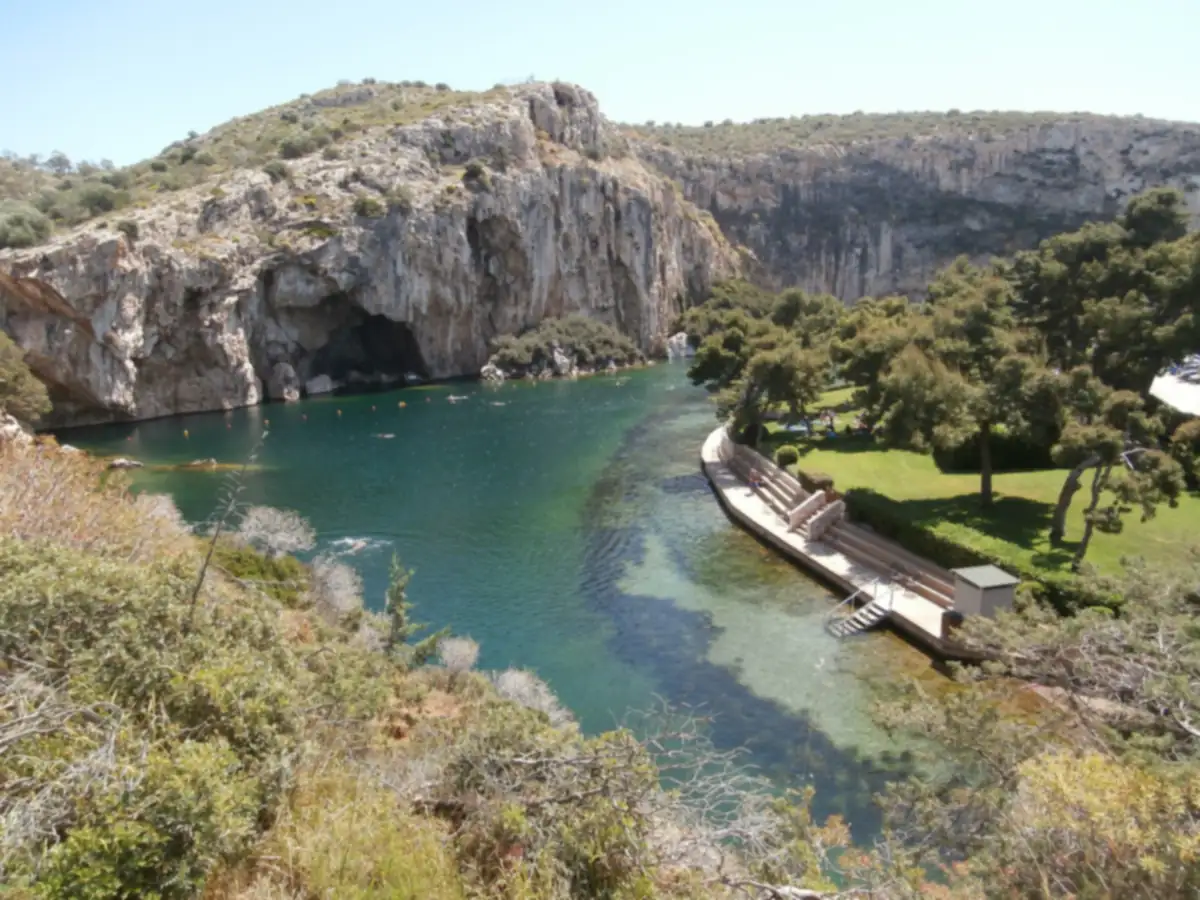
Athens works year-round. April to June and September to October are the months we’d pick: 20 to 30°C, long evenings, the sea at Vouliagmeni still warm in October. July and August pass 35°C, and the Acropolis is for 8 am. Winter is mild and quiet, and the museums are yours.
How you get here
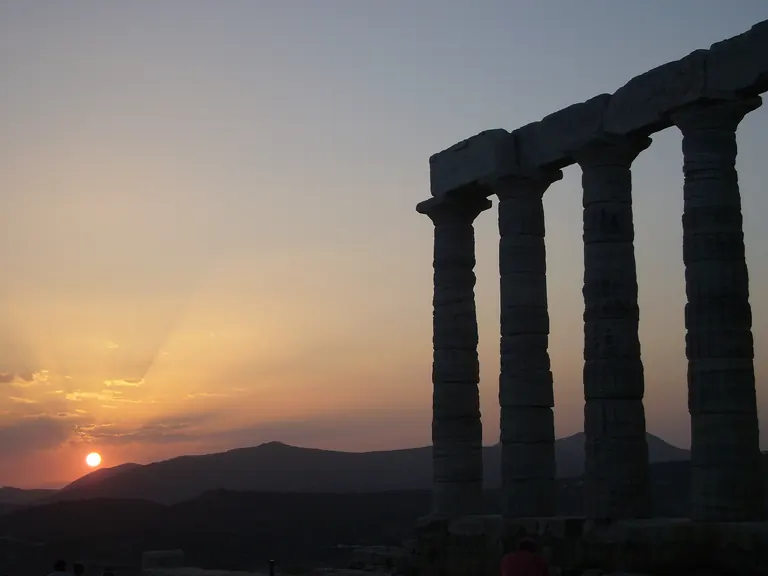
Athens International Airport is 35 to 45 minutes from the center by taxi, at a flat fare, or about 40 minutes on the metro to Syntagma and Monastiraki. Piraeus, the main port for the islands, is 20 minutes from Monastiraki by metro. Delphi is 2.5 to 3 hours by road, Cape Sounion just over an hour down the coast.
Questions
- How many days does Athens need?
- Two full days cover the Acropolis and its museum, the Agora, and two evenings in different neighborhoods. Three if you add Delphi or Sounion.
- Is Athens safe at night for someone on their own?
- The central neighborhoods where visitors stay, Plaka, Koukaki, Syntagma and Monastiraki, are busy until midnight. As in any big city, keep your phone and wallet where you can feel them on the metro.
- Do I need to book Acropolis tickets in advance?
- On your own, yes in summer: entry is by timed slot. On our trips the guide books the slot for the group; whether entrance fees are in the price is written on each trip page.
- What happens on the first night?
- Dinner together. Every trip starts with a table for the whole group on the first evening, with your trip manager.
- Can I arrive a day early?
- Yes, and many people do, to sleep off the flight. The hotel is named on the trip page, so you can book an extra night at the same place.
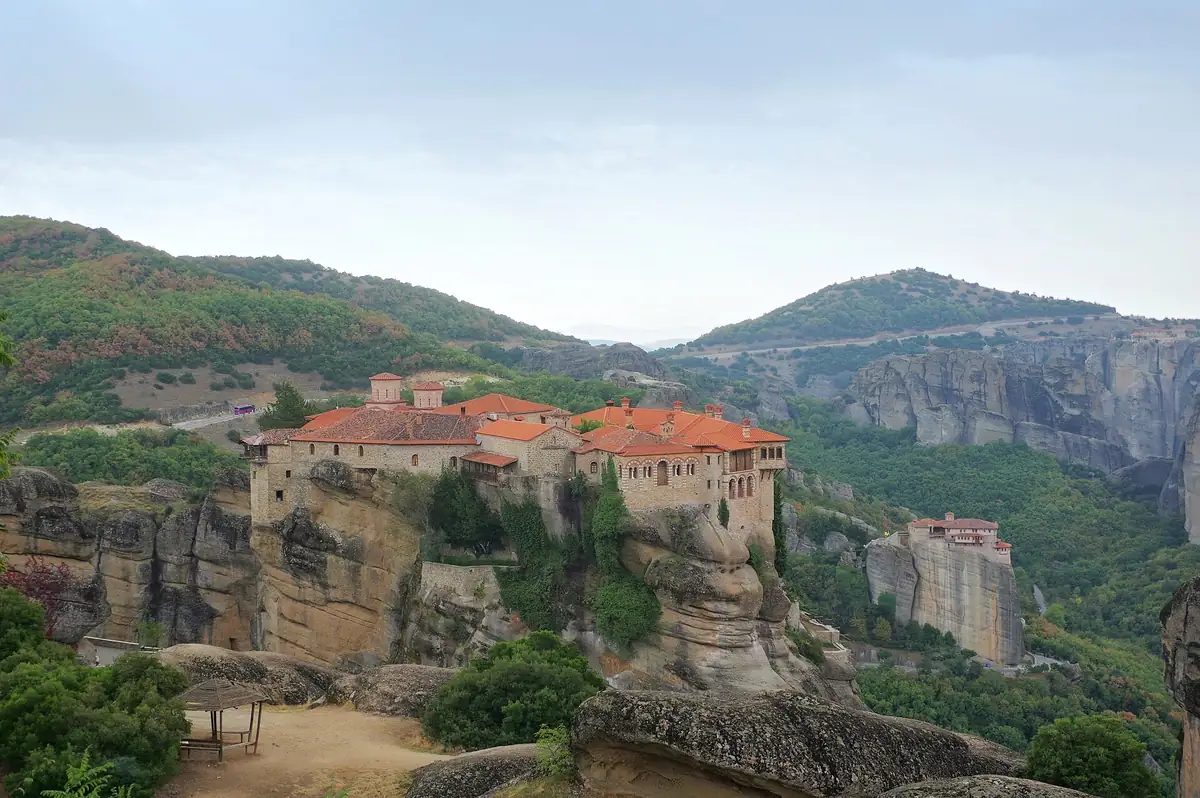
Athens, Meteora & Delphi, then Santorini
Athens with a guide, the monasteries of Meteora, the oracle at Delphi, and the caldera to finish.
Up to 16 · 30s, 40s and early 50s
See the trip