
Crete, the island that is almost a country
Crete is 260 km long, has mountains over 2,400 meters that hold snow into May, and grows olives, grapes and oranges in the valleys between them. It had the first palaces in Europe 4,000 years ago, Venetian harbors for four centuries, and a resistance in the Second World War that the island still talks about. Its food has its own name, and its people will tell you they’re Cretan first. Most Greek itineraries give Crete a day from a cruise ship, if that. We give it the whole trip.
With a licensed guide
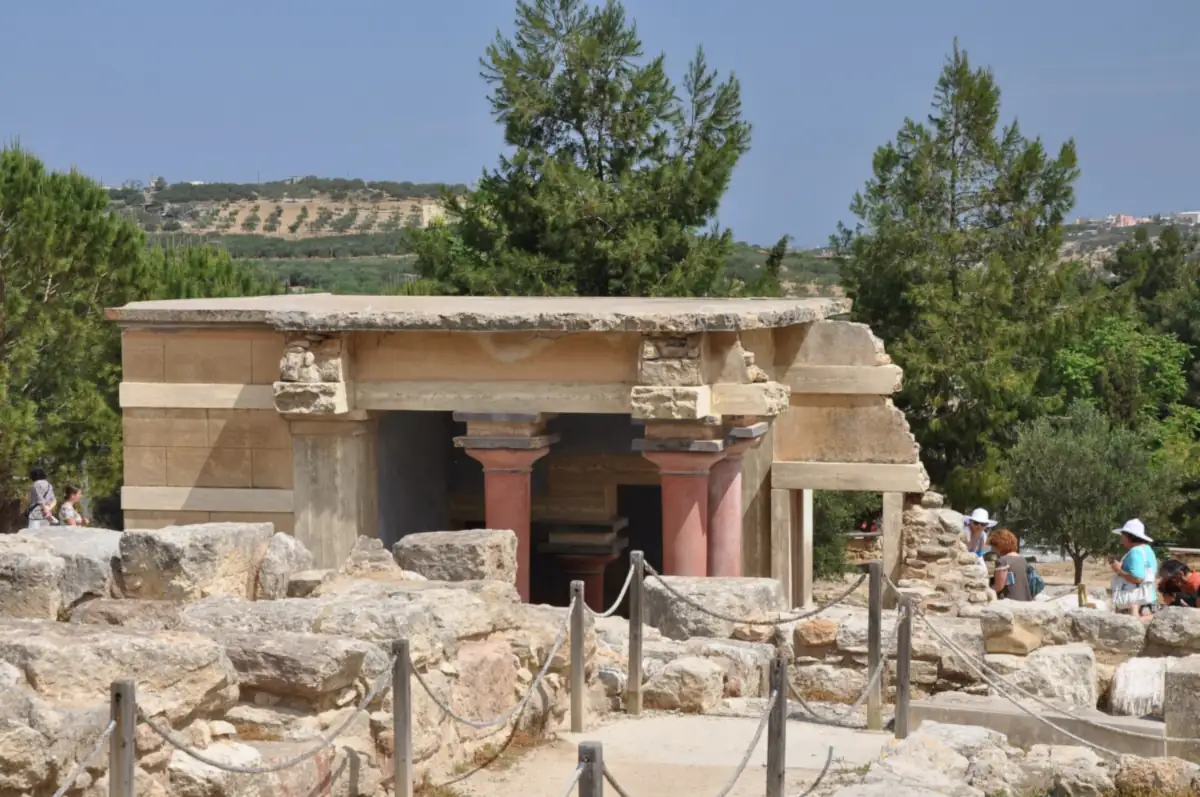
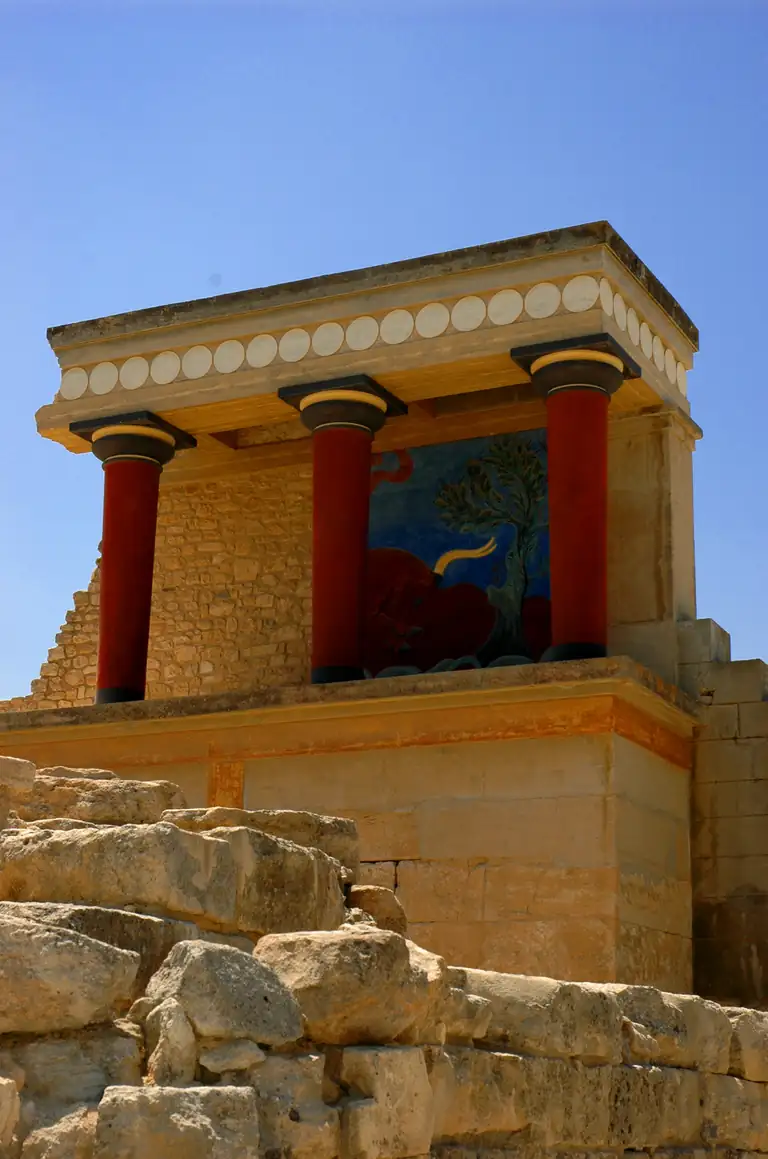
Knossos is the palace of the labyrinth in myth and a Bronze Age palace of about 1,300 rooms in fact, dug out and partly rebuilt in concrete by Arthur Evans a century ago, in a way archaeologists have argued about ever since. A licensed guide tells you which walls are 3,500 years old and which are from the 1920s, and walks you through the throne room, the storerooms with their jars taller than a person, and the stone drains that carried rainwater off the roofs. The museum in Heraklion holds what came out of the ground: the bull-leaping fresco, the snake goddess, the Phaistos Disc that nobody has read. In 2025, Knossos and five other Minoan palaces were added to the UNESCO World Heritage list. Which sites are on the program is written with each departure.
Scenes from Crete
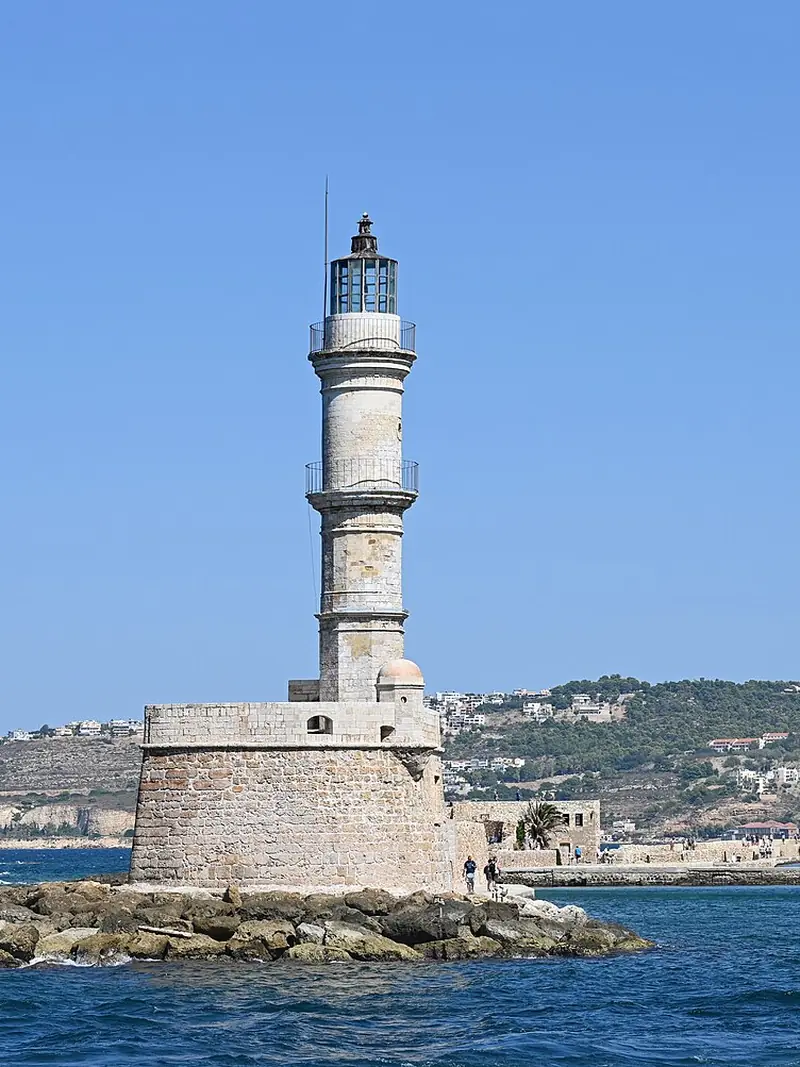
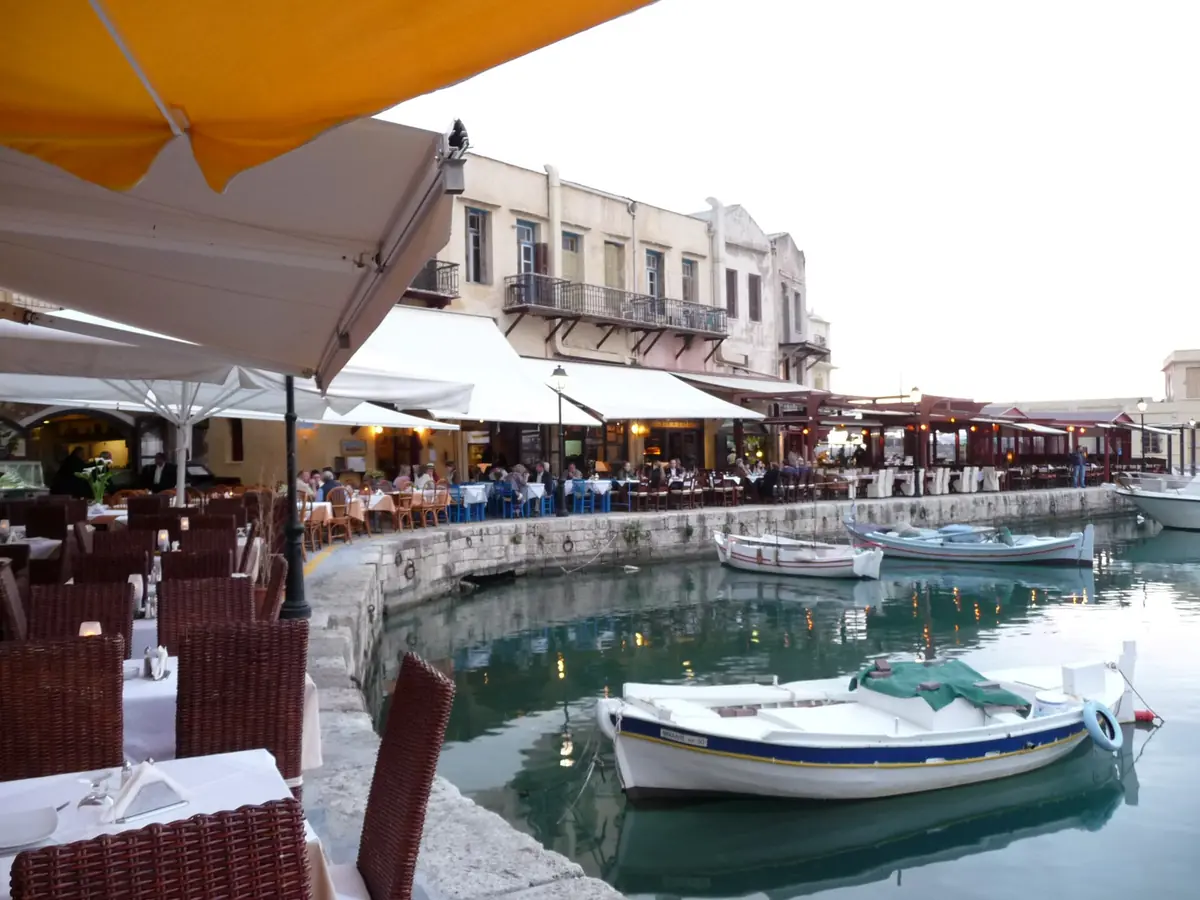
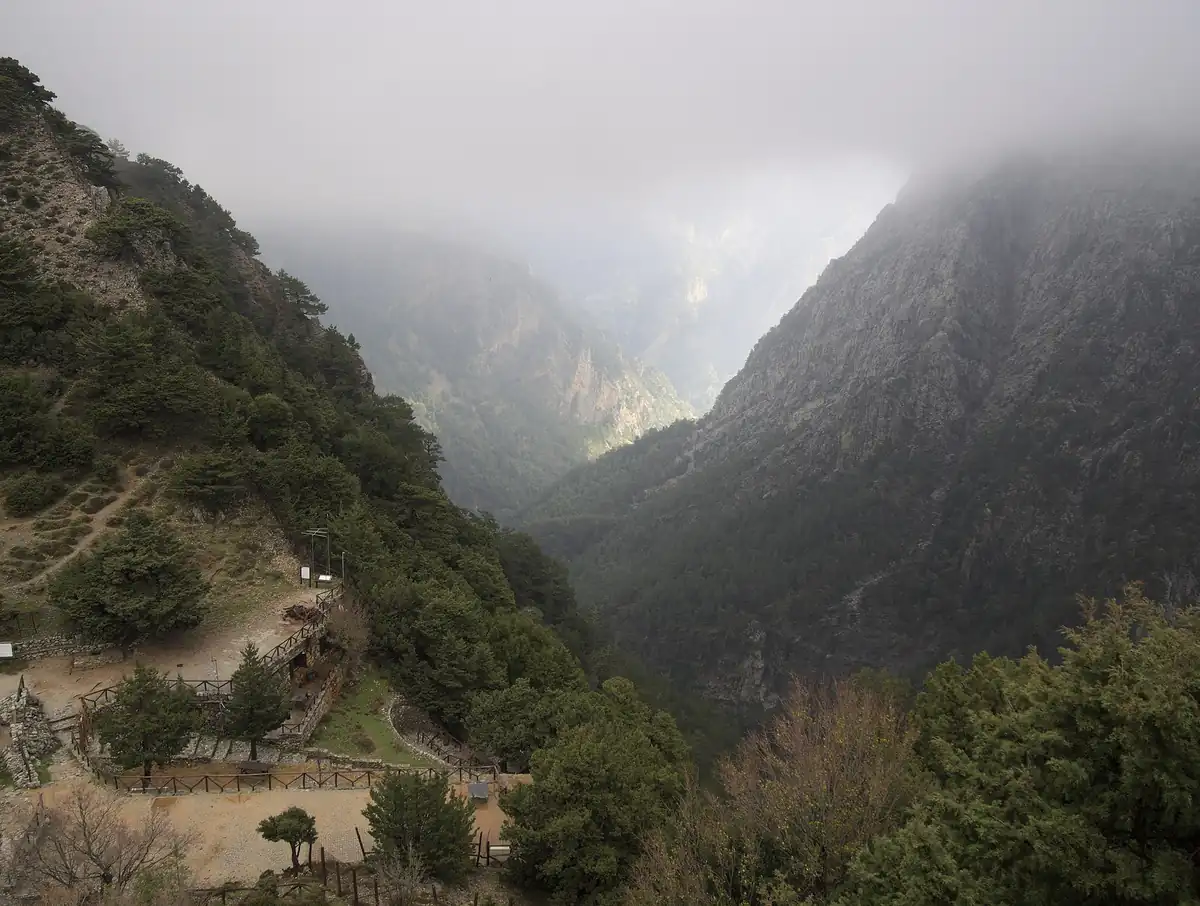
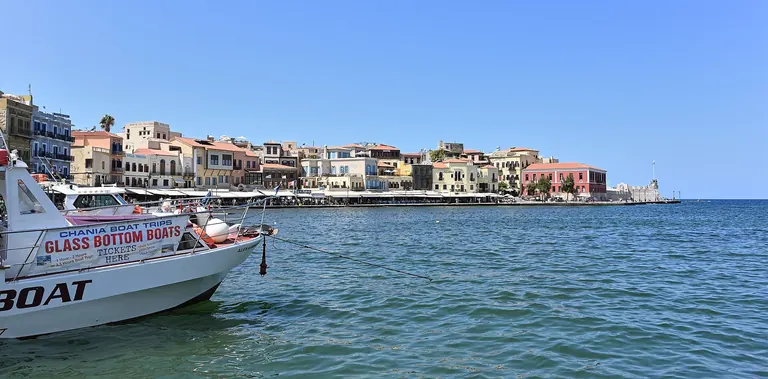
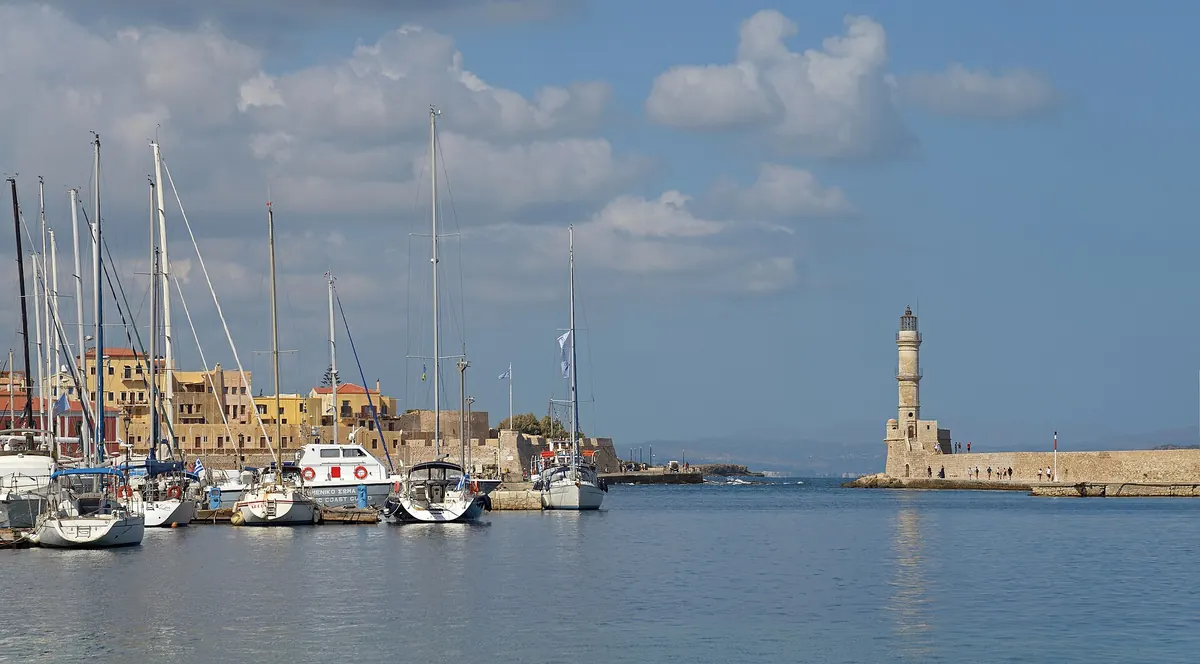
Chania in the evening, when the Venetian harbor turns the color of its lighthouse and the tables fill along the quay. Rethymno, where the old town is a grid of Venetian doors and Ottoman fountains under a fortress on the headland. A village in the mountains above, where lunch is lamb cooked slowly and the raki arrives without being ordered. A gorge: Samaria, the 16 km walk from the mountains down to the Libyan Sea, is the famous one, and there are shorter ones for a morning. The south coast, where the villages face Africa and the water is clear enough to count the stones. The program for each departure is published with its dates.
When to go
Crete is the southernmost of the big Greek islands, and its season runs from April to early November. The sea is warm from May into October. The Samaria gorge normally opens from May to October and closes on days of heavy rain. April and May put wildflowers on the hills and snow on the peaks at the same time; September and October are warm and quieter.
How you get here
Crete has two international airports, Heraklion and Chania, with 50-minute flights from Athens and, from spring to fall, direct flights from most of Europe. From Piraeus the overnight ferries take about 9 hours. In summer there are also ferries from Santorini to Heraklion in about 2 hours. Where the Crete trip starts and ends is written with each departure.
Questions
- Is one trip enough for Crete?
- No, and that’s fine. The trip stays on the island from start to finish, and the program for each departure says which parts of it we reach and where the nights are.
- How much walking is there?
- Knossos and the old towns are flat, with some uneven ground. Gorges are a different matter: Samaria is 16 km downhill on stones and takes 5 to 7 hours. Whether it is on the program, as the day or as an option, is written on the trip page.
- Is Crete safe?
- Yes. Greece is a country where people eat out late and walk home, and Crete’s towns are busy in the evening. Your trip manager knows the towns and tells you what’s open.
- What’s the food like?
- Crete has its own kitchen: dakos, a barley rusk with tomato and soft cheese; snails fried with rosemary; lamb with wild greens; and the olive oil everything swims in. The raki arrives at the end of the meal whether you ordered it or not.
- Which airport do we use?
- The program for each departure says where the trip starts and ends: Heraklion, Chania or both. Book flights after you’ve read it.
Crete
Too big to be a stop, so it gets its own trip: the island of Knossos, Venetian harbors and mountains that drop into the sea.
Up to 16 · 30s, 40s and early 50s
See the trip