
Delphi, where the ancient world came with its questions
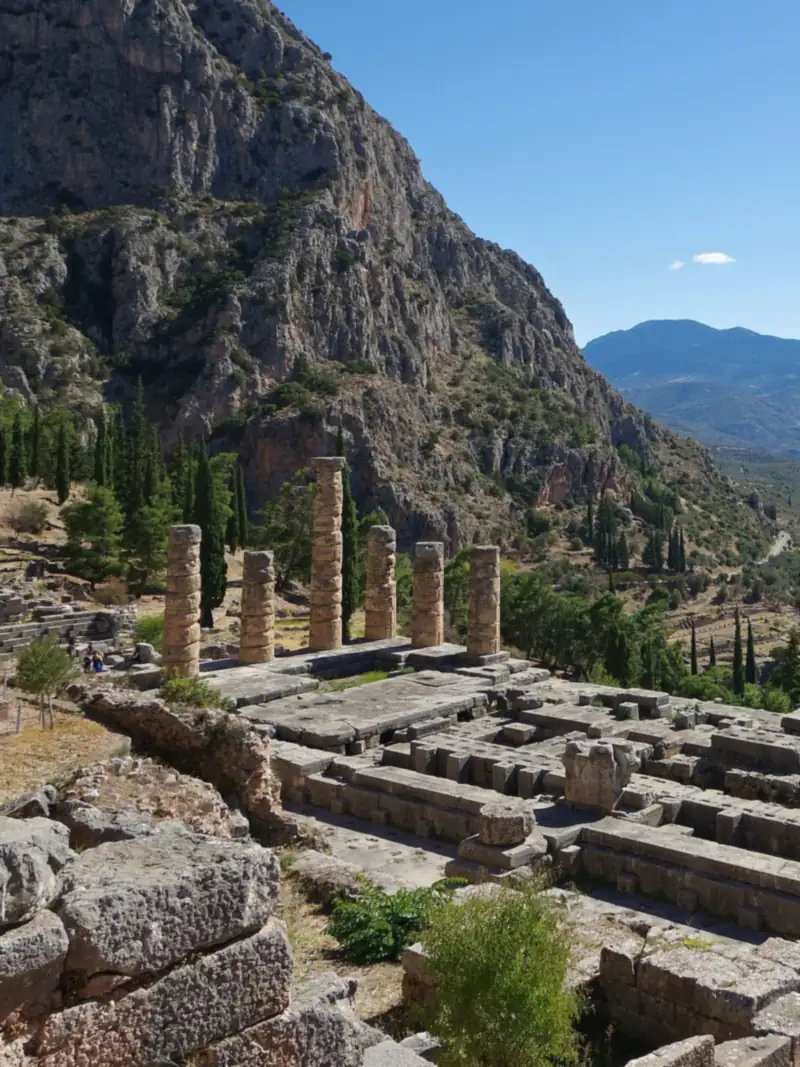
For more than a thousand years, kings, cities and farmers climbed the slopes of Mount Parnassus to ask the oracle of Apollo what to do next. The answers were hard to read. The place is not: a sanctuary of temples, treasuries, a theater and a stadium stacked up a mountainside at 570 meters, above a valley of olive trees that runs down to the Gulf of Corinth. The Greeks called it the navel of the world and marked the spot with a carved stone, and one of those stones is in the museum. Tradition says two words were carved at the entrance to the temple: know yourself.
With a licensed guide
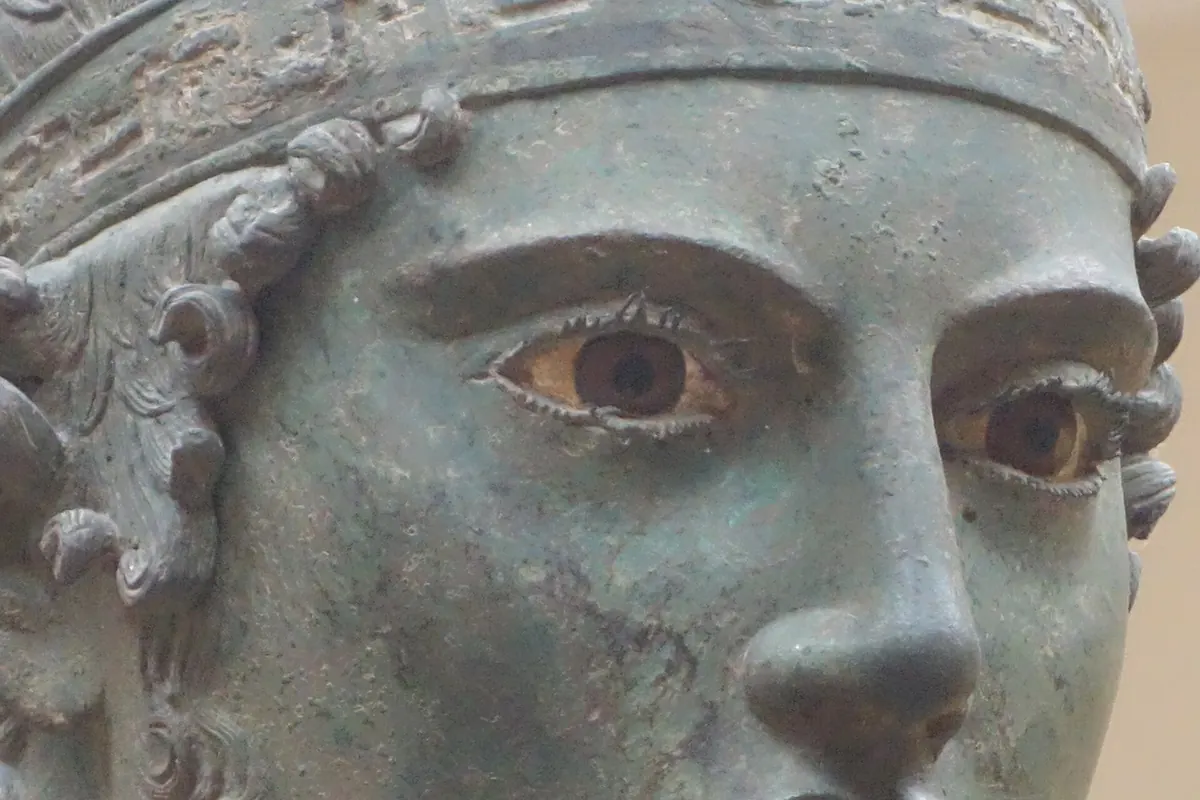
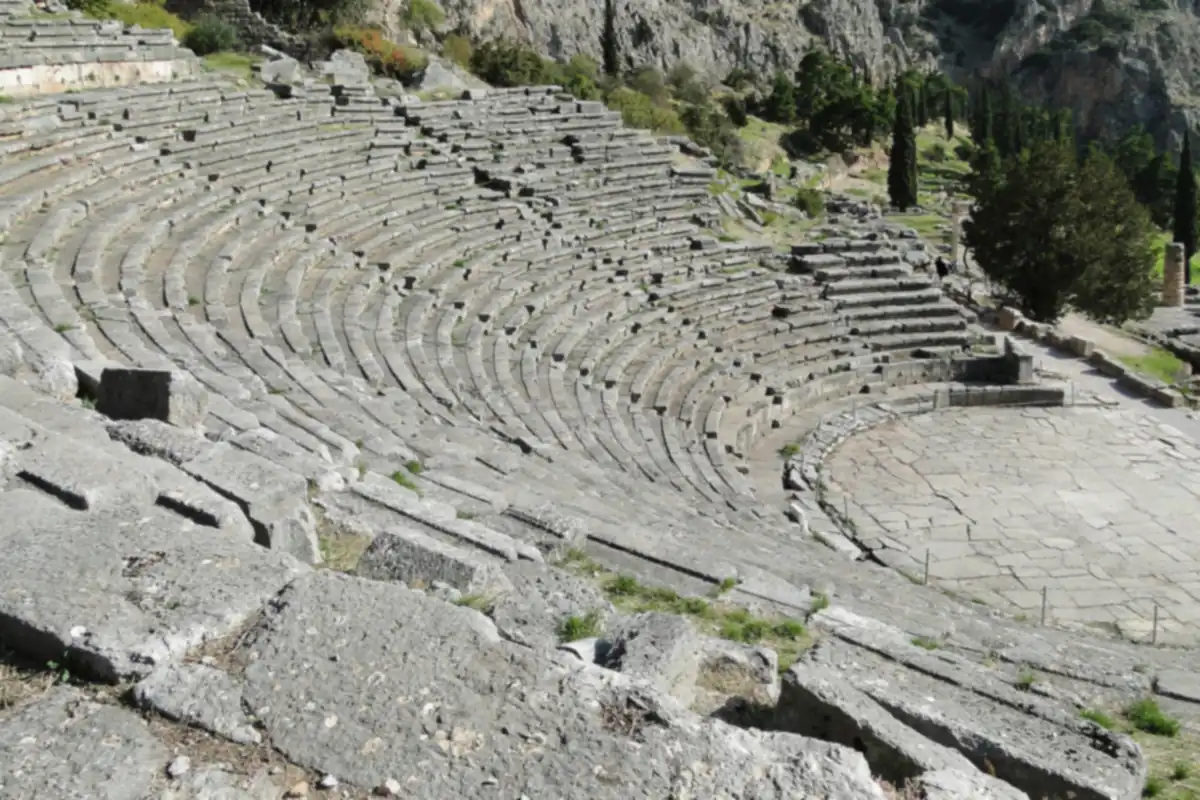
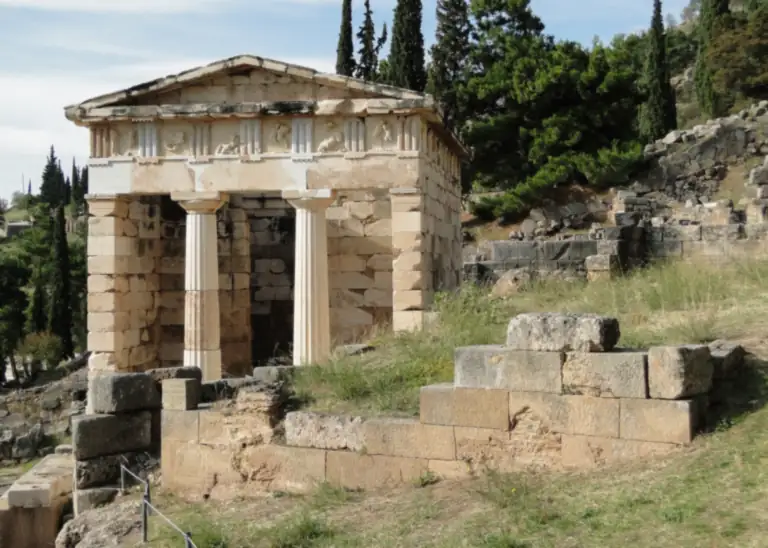
Without a guide, Delphi is a hillside of foundations. With one, the Sacred Way becomes a street: the treasuries that cities built to show off their victories, the Athenian one rebuilt stone by stone, the polygonal wall that has held the temple terrace up since the 6th century BC, the theater with 35 rows looking down on the whole sanctuary. In the museum, the guide takes you to the pieces worth your time: the bronze Charioteer with his inlaid eyes, the Sphinx that the people of Naxos sent here around 560 BC, the twin statues of Kleobis and Biton. Then the guide steps back and lets you look.
A morning at Delphi
The sanctuary opens early, and the first hour belongs to whoever is already there. You start on the Sacred Way with the guide, pass the treasuries and the wall, and reach the Temple of Apollo as the sun clears the cliffs behind it. The theater is a few minutes further up. From its top row you see the whole sanctuary below and the olive grove running toward the sea. The museum is a short walk from the gate, and the Charioteer is waiting at the end of it. Lunch is in Arachova, the stone town 10 km up the road on Parnassus, known for its cheese, its pasta and its red wine. The program for each departure is published with its dates.
When to go
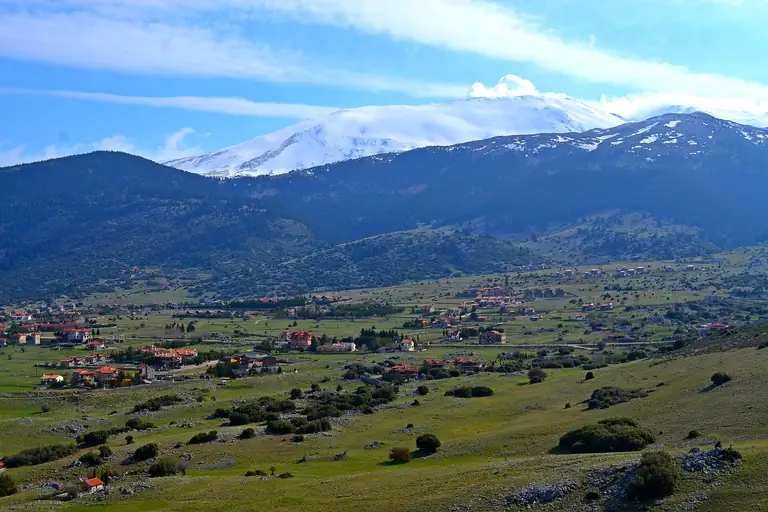
Delphi sits at about 570 meters, a few degrees cooler than Athens. Spring brings wildflowers between the stones and snow still on the peaks above; fall has clear light and warm afternoons. Summer mornings are fine, summer noons are hot on the open slope. In winter Arachova becomes a ski town and the sanctuary is nearly empty.
How you get here
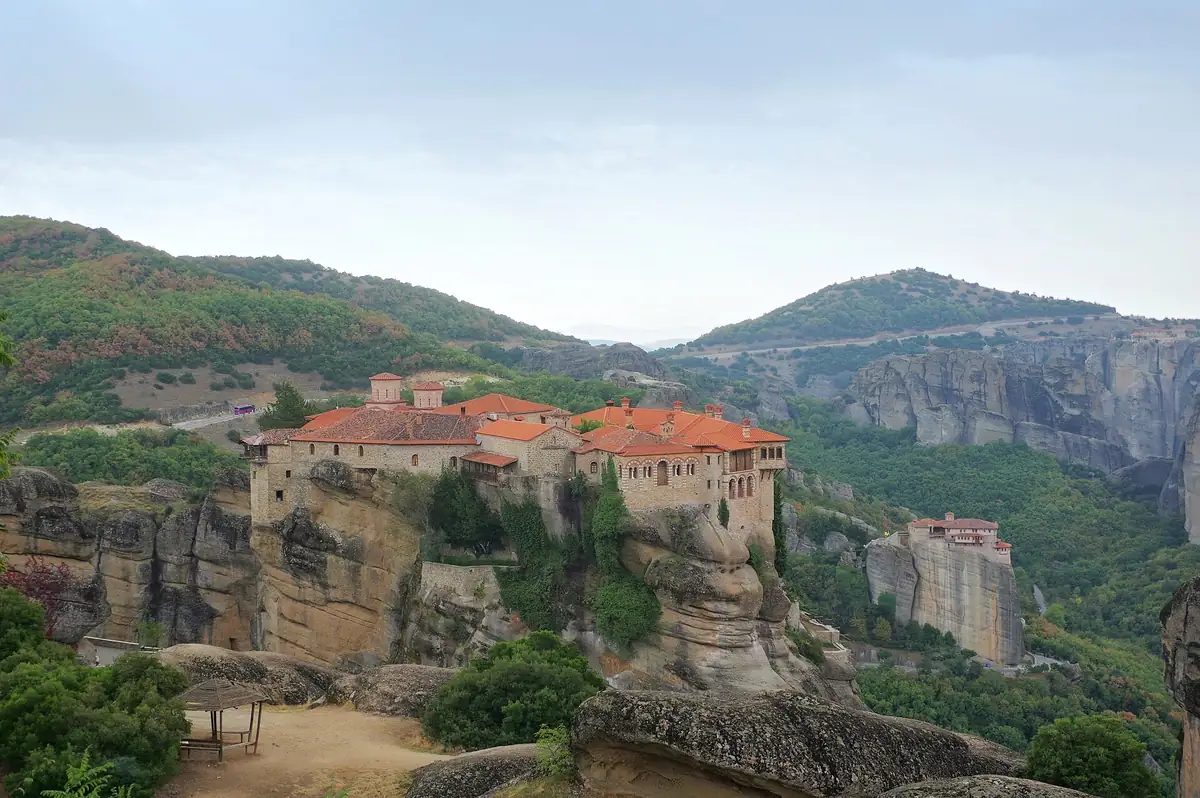
Delphi is about 180 km northwest of Athens, 2.5 to 3 hours by road through Thebes and Livadia, with the last stretch climbing onto the shoulder of Parnassus. There is no train. On our mainland trip Delphi pairs with Meteora, and the road between the two crosses the center of Greece in around 3 to 4 hours. Exact times are published with each departure.
Questions
- Is Delphi worth it if I’ve seen the Acropolis?
- They do different jobs. The Acropolis is one city’s showpiece; Delphi is where the whole Greek world met, argued and left gifts. The mountain does the rest.
- How much walking is there?
- The site is on a slope. The main path climbs for about 20 minutes to the theater, and the stadium, which you see from its edge but can’t enter, is a further climb above it. Shade is rare, so a hat and water matter more than fitness.
- Can we see the Castalian Spring?
- The spring where pilgrims washed before entering is closed to visitors because of falling rock. You see it from the road.
- Do we go into the museum?
- Yes, with the guide. The Charioteer is one of the few large bronze statues to survive from the 5th century BC, and it is the reason most people remember Delphi’s museum.
- Is Delphi a day trip from Athens?
- It can be, and many people do it that way: around 6 hours on the road for 3 at the site. On our mainland trip it isn’t a day trip. Delphi and Meteora are on the same program, and where you sleep is written with each departure.
Athens, Meteora & Delphi, then Santorini
Athens with a guide, the monasteries of Meteora, the oracle at Delphi, and the caldera to finish.
Up to 16 · 30s, 40s and early 50s
See the trip