
Naxos, the green island in the middle of the Cyclades
Naxos is the largest island in the Cyclades and the one that never needed tourism to make a living. It grows potatoes, makes cheese from its own goats and cows, and distills a liqueur from the leaves of the citron tree. Its mountains are high enough to hold clouds, its west coast is one long run of sand, and its harbor town climbs from the ferry dock to a Venetian castle. Most people see it from the deck of a ferry on the way to somewhere more famous. That gap is what we built the Cyclades trip around.
With a licensed guide
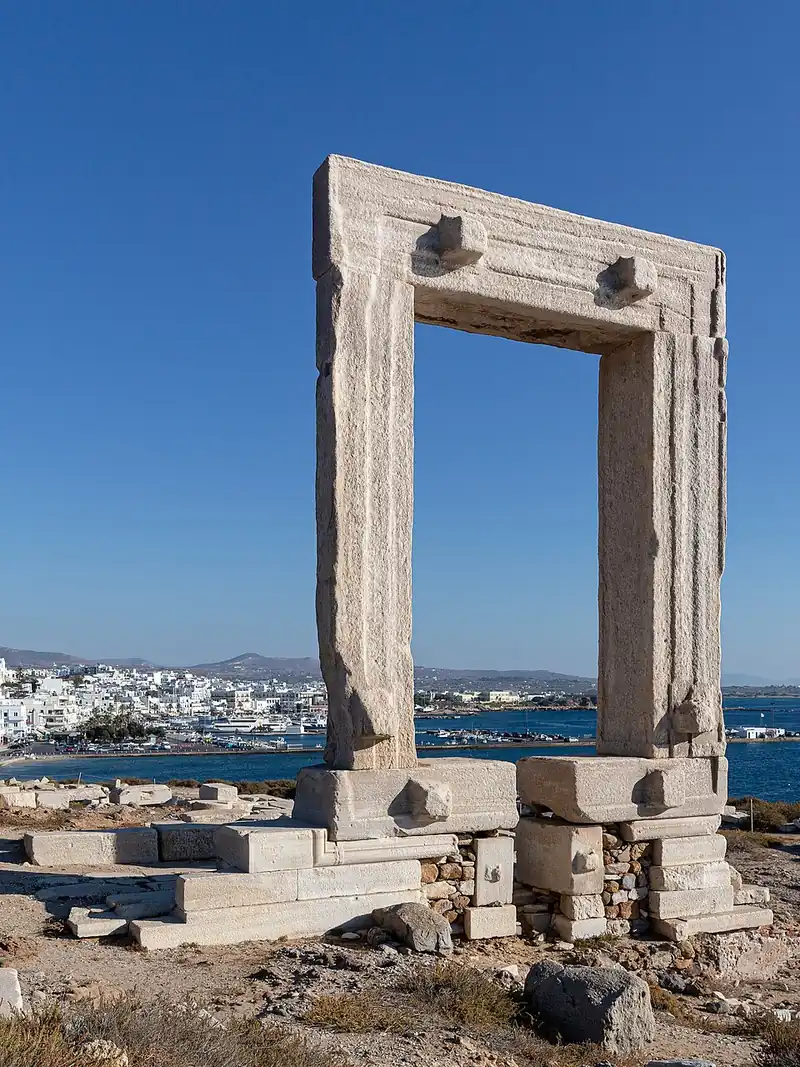
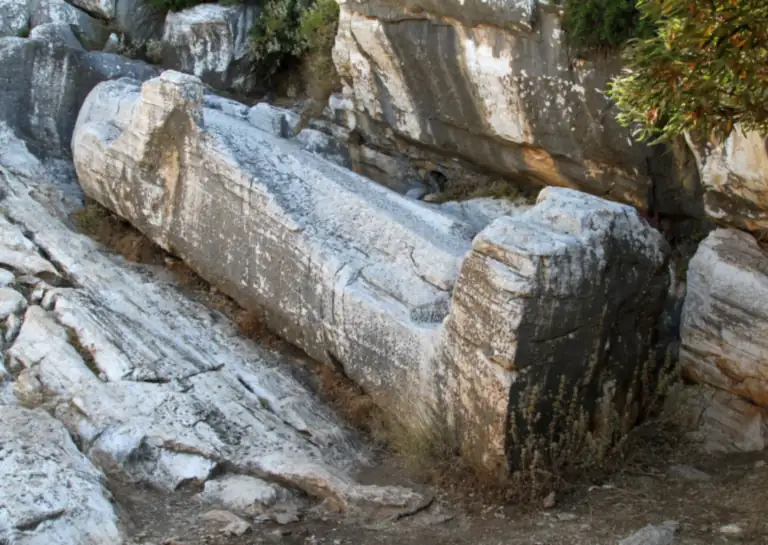
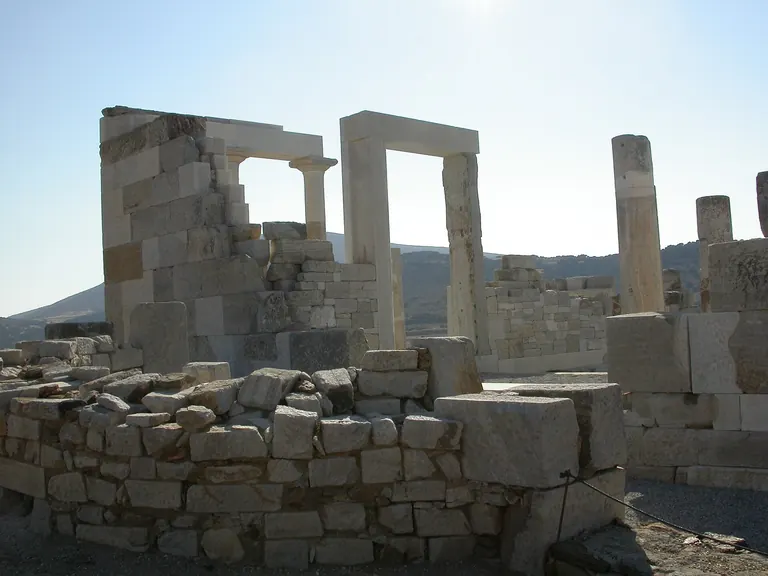
The Portara is a doorway with nothing behind it: a marble gate about 6 meters tall, the only finished part of a temple to Apollo begun around 530 BC by the island’s ruler, who was overthrown before the walls went up. A licensed guide explains why it faces Delos, the sacred island on the horizon, and what the Venetians did with the rest of the temple’s marble. Inland are the Temple of Demeter near Sangri, a small 6th-century BC temple to the goddess of grain that stands again among the fields it was built for, and the kouroi, three unfinished marble giants left lying where their sculptors abandoned them around 2,600 years ago, two near Melanes and one at Apollonas. Which sites are on the program is written with each departure.
Two days on Naxos
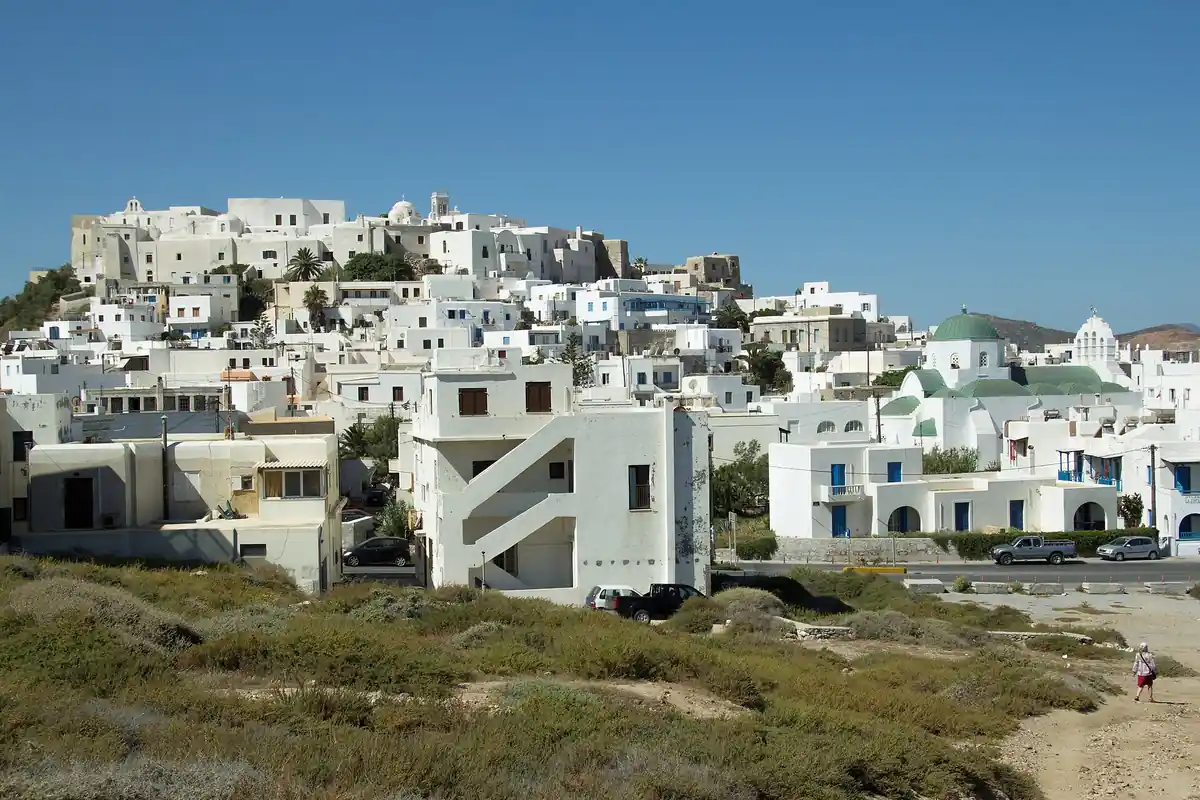
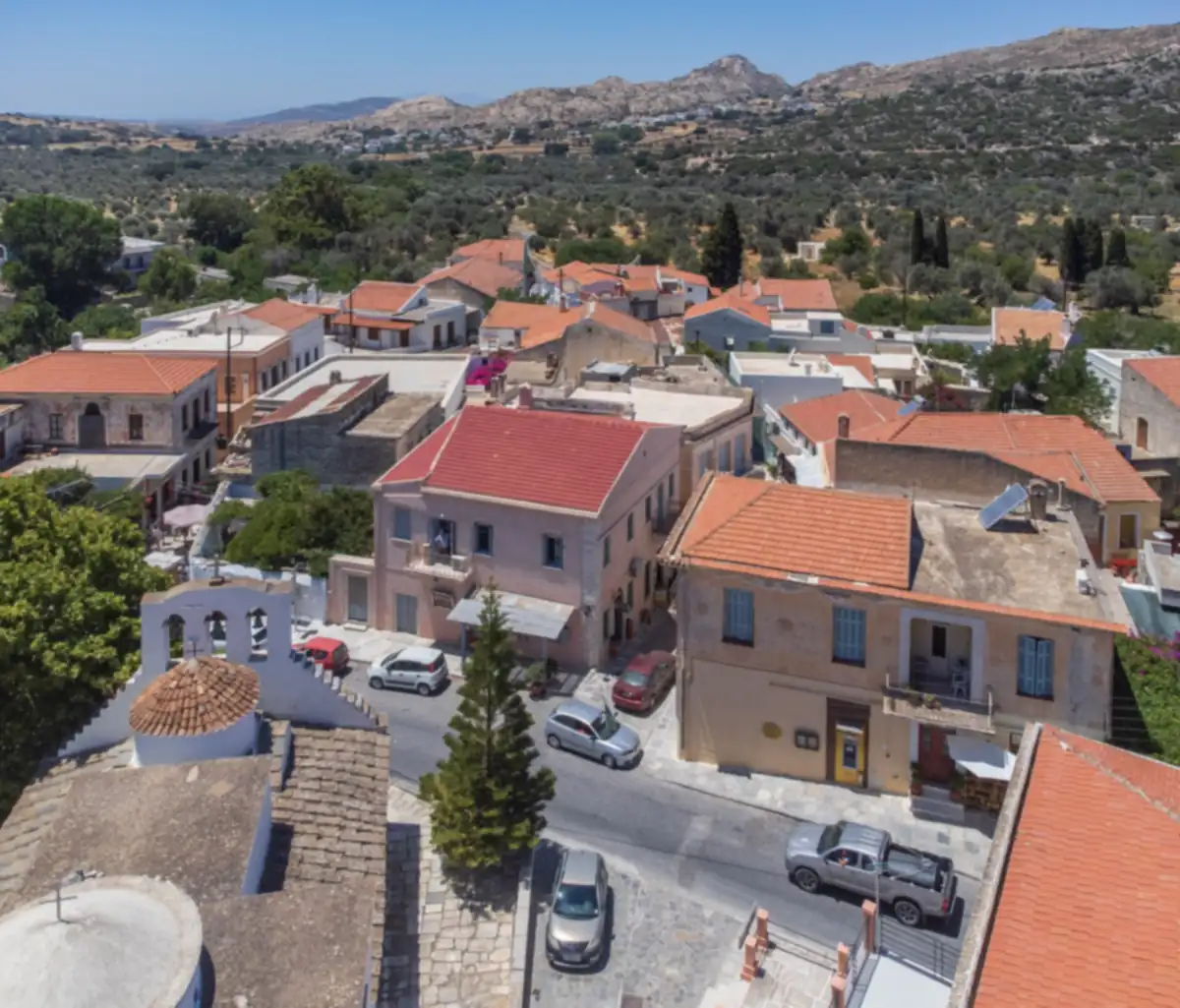
The first evening is the Portara at sunset, like everyone else’s, and then the lanes of the Kastro, where Venetian coats of arms are still carved over the doors and the Catholic cathedral is still a working church. Dinner is in the alleys of the Old Market below. The next day goes inland: Halki, the old capital of the valley, with its neoclassical houses and a citron distillery that has run since 1896; Apeiranthos, built of marble on the slopes of Mount Fanari, with a dialect of its own; Filoti, the big village under Mount Zas, with a plane tree over the square. Then back to the coast for a swim at Plaka or Agia Anna, where the sand runs for kilometers and the water is clear to the bottom. The program for each departure is published with its dates.
When to go
The sea is warm from late May to October. In July and August the meltemi, the north wind of the Cyclades, blows hardest and puts waves on the west-coast beaches; the villages inland stay quiet in any month. Late May, June, September and early October give warm sea, open tavernas and ferry decks with room on them.
How you get here
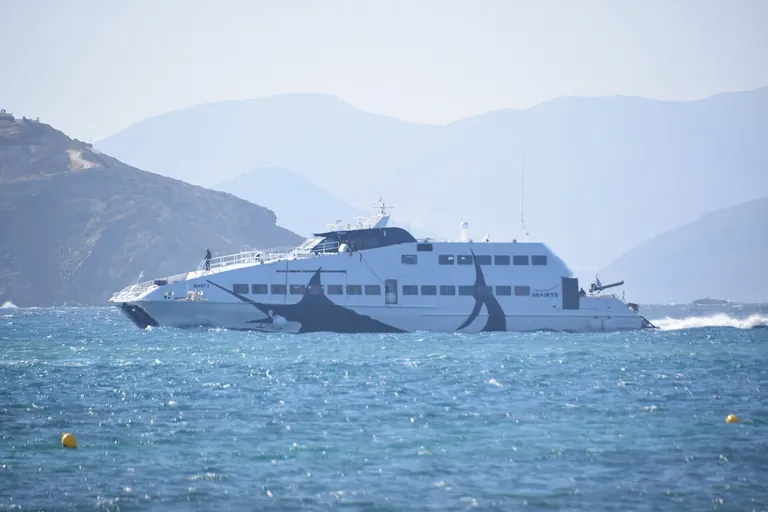
From Piraeus, the port of Athens, fast ferries reach Naxos in about 4 hours and conventional ferries in 5 to 6. Flights from Athens take about 45 minutes to the island’s small airport. Paros is under an hour away by ferry, which is why the two islands travel together on our Cyclades trip. The boats we use and the exact times are published with each departure.
Questions
- Is Naxos touristy?
- It has hotels and beach bars, like every Greek island with an airport. It also has farming villages inland where the café is for the people who live there.
- Can I swim?
- Yes. Agios Prokopios, Agia Anna and Plaka are a short ride from town, with sand and shallow, clear water. Whether a beach afternoon is in the program is written on the trip page.
- What’s the food like?
- Naxos feeds itself: potatoes, graviera and arseniko cheeses, lamb and goat from the mountains, and kitron, the liqueur made from the leaves of the citron tree. Order the local cheese plate wherever you sit down.
- Is there a boat trip?
- Day boats leave Naxos town for the Small Cyclades to the south, Koufonisia among them, and for Paros. Whether a boat day is in the price is written on the trip page.
- How hilly are the villages?
- Apeiranthos and Filoti are built on slopes, with marble steps and lanes. Nothing is long, but flat shoes with grip help.
Naxos, Paros & Milos, then Santorini
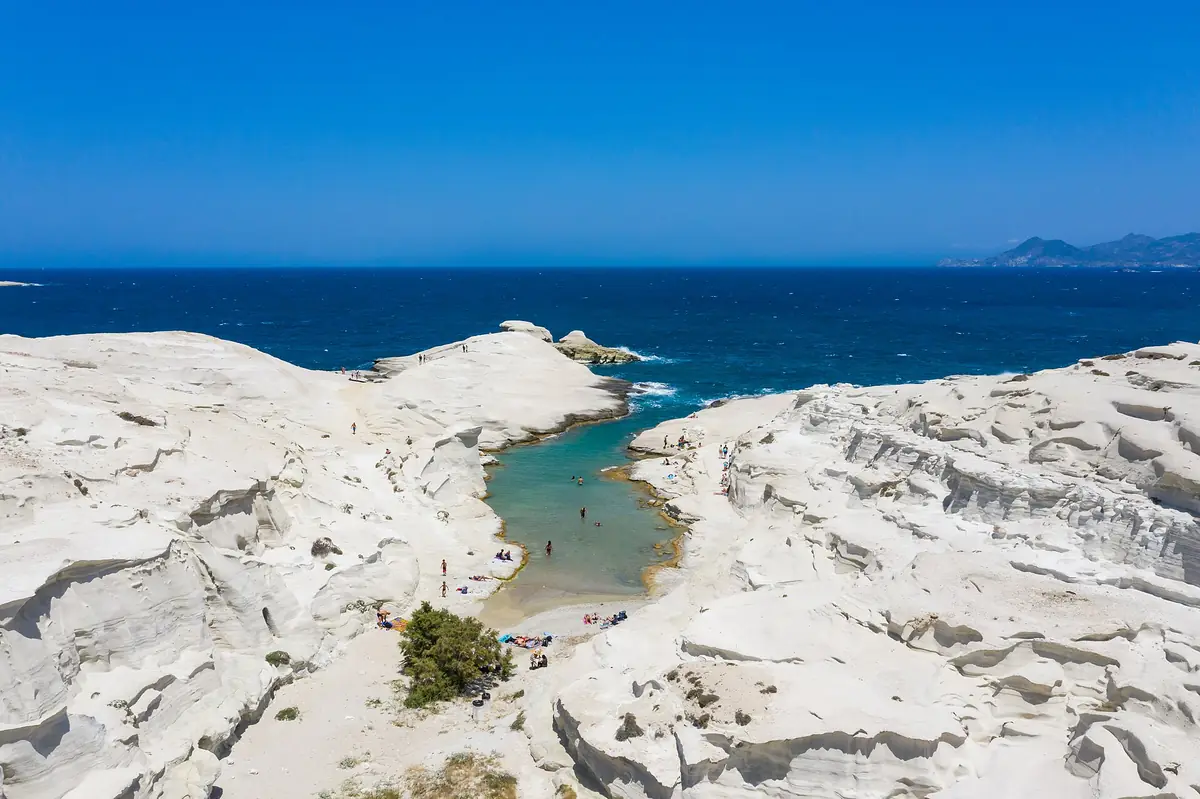
Three Cycladic islands that most itineraries skip, by ferry, with Santorini for the finale.
Up to 16 · 30s, 40s and early 50s
See the trip