
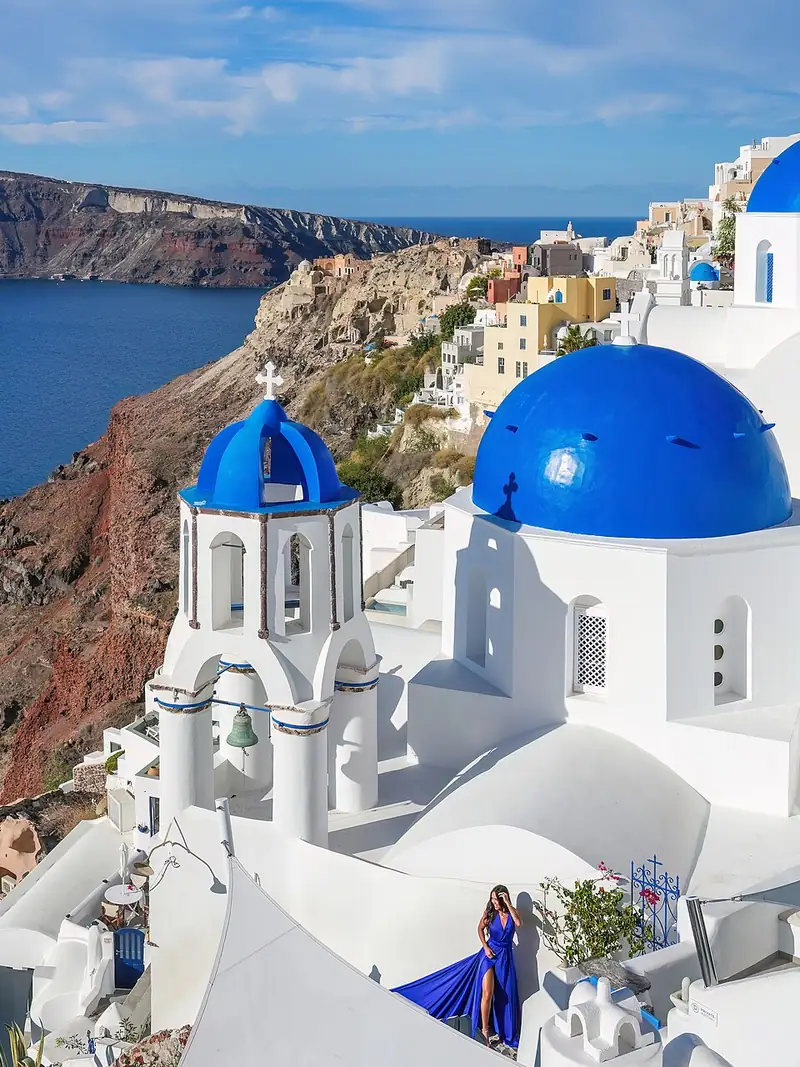
Santorini, saved for the end
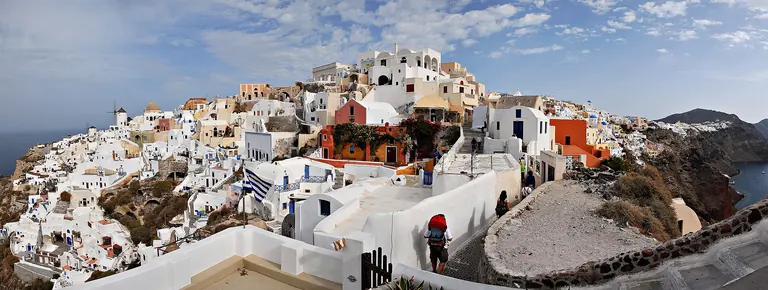
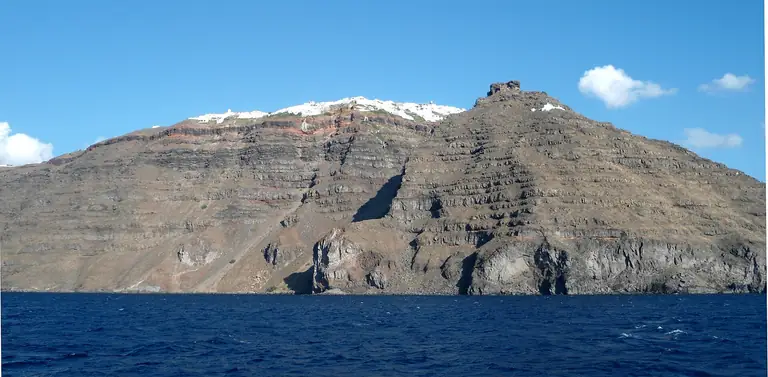
Santorini is what’s left of a volcano that blew itself apart around 1600 BC. The towns sit on the rim of the crater, 300 meters above a bay of deep water where the mountain used to be, and every evening the lanes of Oia fill with people waiting for the sun to go down behind Thirasia, the island across the water. It’s the picture that made you want Greece in the first place. We go there too. We just go last.
Why last
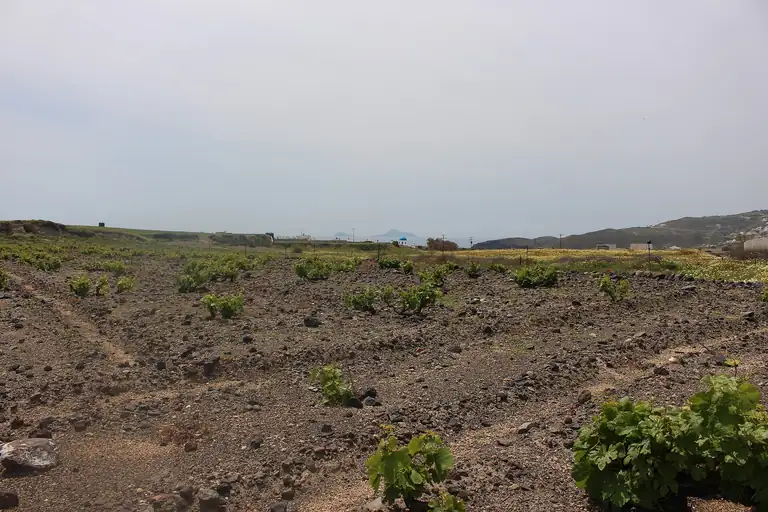
Two of our three trips end on Santorini. By the time you get there, you’ve stood under the rocks at Meteora or swum off the white rocks of Milos, and you’ve had a week of Greece that isn’t on postcards. Santorini then does what it’s good at: a night or two of the view, a morning in the lanes before the cruise ships, a glass of wine from vines grown in volcanic ash. It’s a finale, not a base. A week on the rim is a different trip, and it’s not the one we run.
With a licensed guide
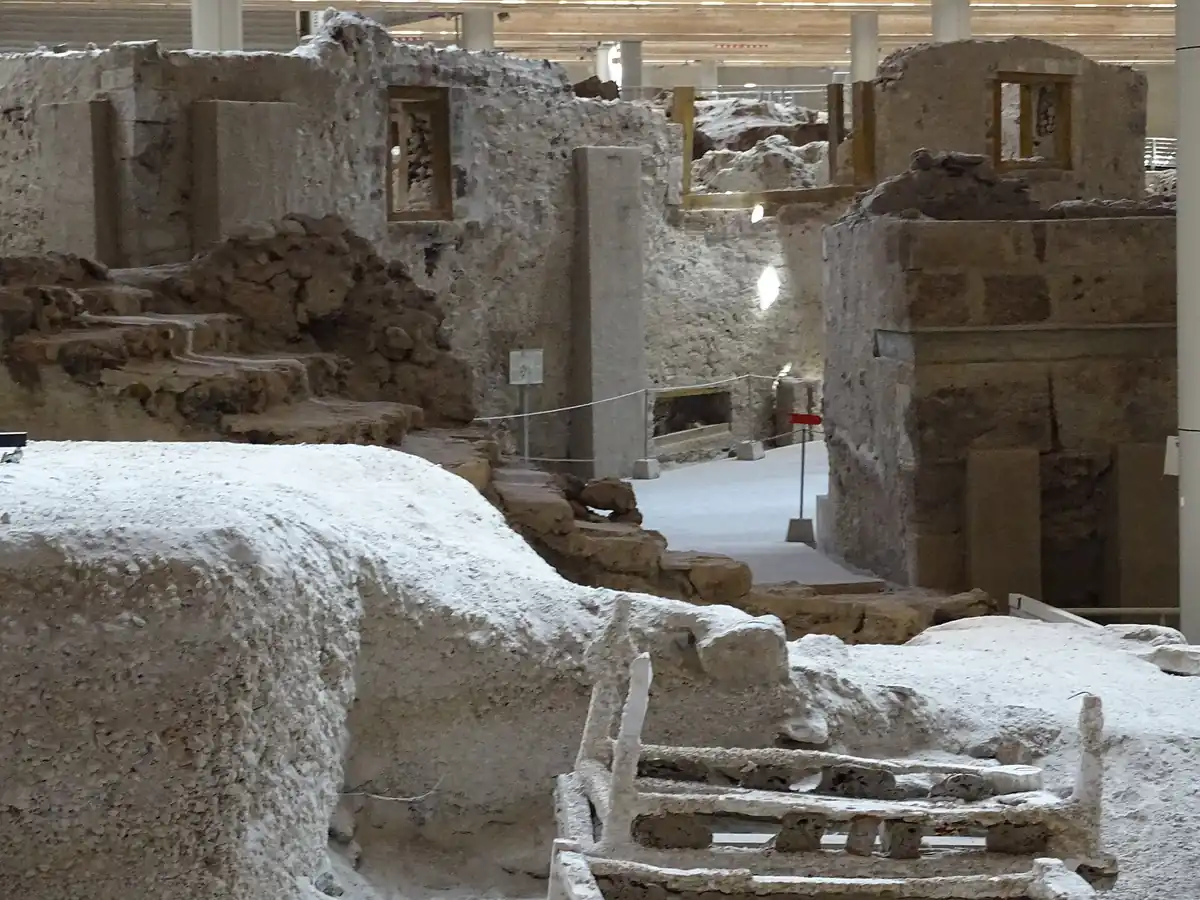
Under the ash on the south coast is Akrotiri, a Bronze Age town buried by the eruption 3,600 years ago and dug out with its streets, staircases and three-story houses intact, under a roof that keeps the sun off. A licensed guide walks you through it and then to the Museum of Prehistoric Thera in Fira, where frescoes from those houses hang, the blue monkeys among them, beside the golden ibex found in a wooden box in 1999. Which sites are on the program is written with each departure.
A night or two on Santorini
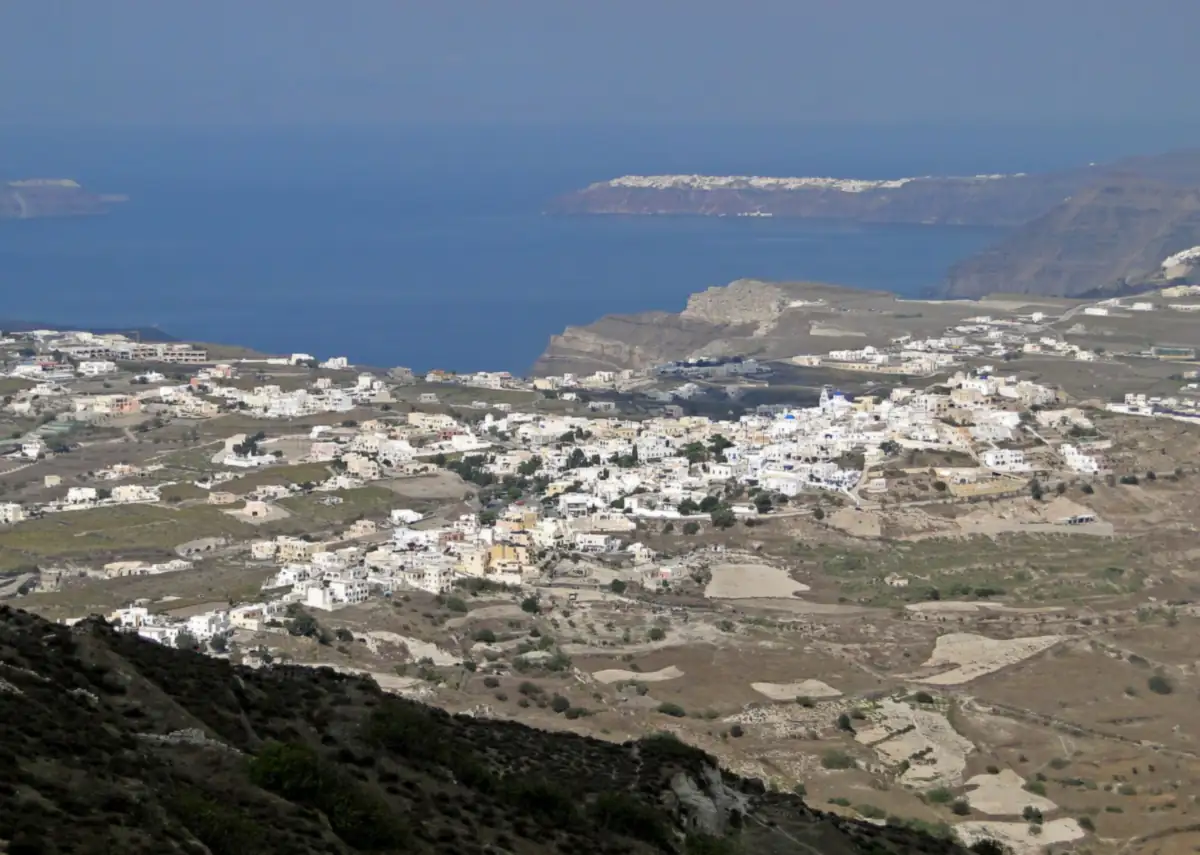
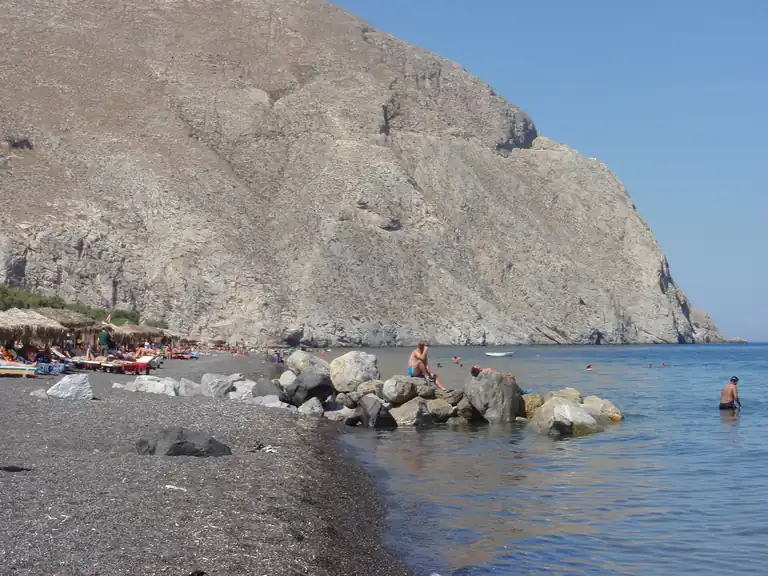
The ferry comes into the port under the cliff, and the bus climbs the switchbacks to the rim. Fira is the town; Oia, 11 km along the ridge, is the one in the photographs. The evening is the view, from wherever you end up: a terrace in Imerovigli, the path toward Skaros rock, a table above the caldera. The next morning is the lanes of Oia before 10, when the cruise-ship groups arrive and the town turns into a line. Then the other Santorini: Pyrgos, the village on the hill in the middle of the island that the day-trippers miss, a winery where the vines are trained into baskets on the ground against the wind, and if there’s time, the black-sand beach at Perissa or the red one near Akrotiri. The program for each departure is published with its dates.
When to go
The view works in every month. From June to September the island is full and Oia’s sunset is shoulder to shoulder; April, May and October have the same light, warm days and room on the paths. The sea is warm from June to October.
How you get here
Two of our trips end on Santorini. The Cyclades trip arrives by fast ferry from Milos, about 2 hours. How the mainland trip gets from Athens to Santorini, by air or by sea, is written in its program. From Piraeus the fast boats take about 5 hours and the conventional ferries 7 to 8. Flying home, Santorini has 45-minute flights to Athens and, in summer, direct flights to many European cities.
Questions
- Why not stay longer on Santorini?
- Because after a night or two you’ve seen what it does, and the rest of the week belongs to the Greece that isn’t on postcards. If you want more, you can add nights on your own at the end. The trip’s last day and place are published with its dates.
- Is the hotel on the caldera?
- The hotel for each departure is named before you pay, with its location. Which town it’s in is written on the trip page.
- Is there a boat tour?
- Boats cross the caldera to the crater at Nea Kameni and the hot springs beside it, and sunset cruises leave from the old port and from Vlychada. Whether a boat trip is in the price is written on the trip page.
- Can I swim?
- Yes. Perissa and Kamari have long black-sand beaches on the east coast, and the Red Beach near Akrotiri is one you look down on from the path, since access to the sand has been closed since the 2025 rockfalls. The sea is warm from June.
- Will we see the sunset in Oia?
- The sunset is visible from the whole western rim, and Oia is one spot on it. Whether the program puts the group in Oia at sunset or on a quieter stretch of the rim is written with each departure.
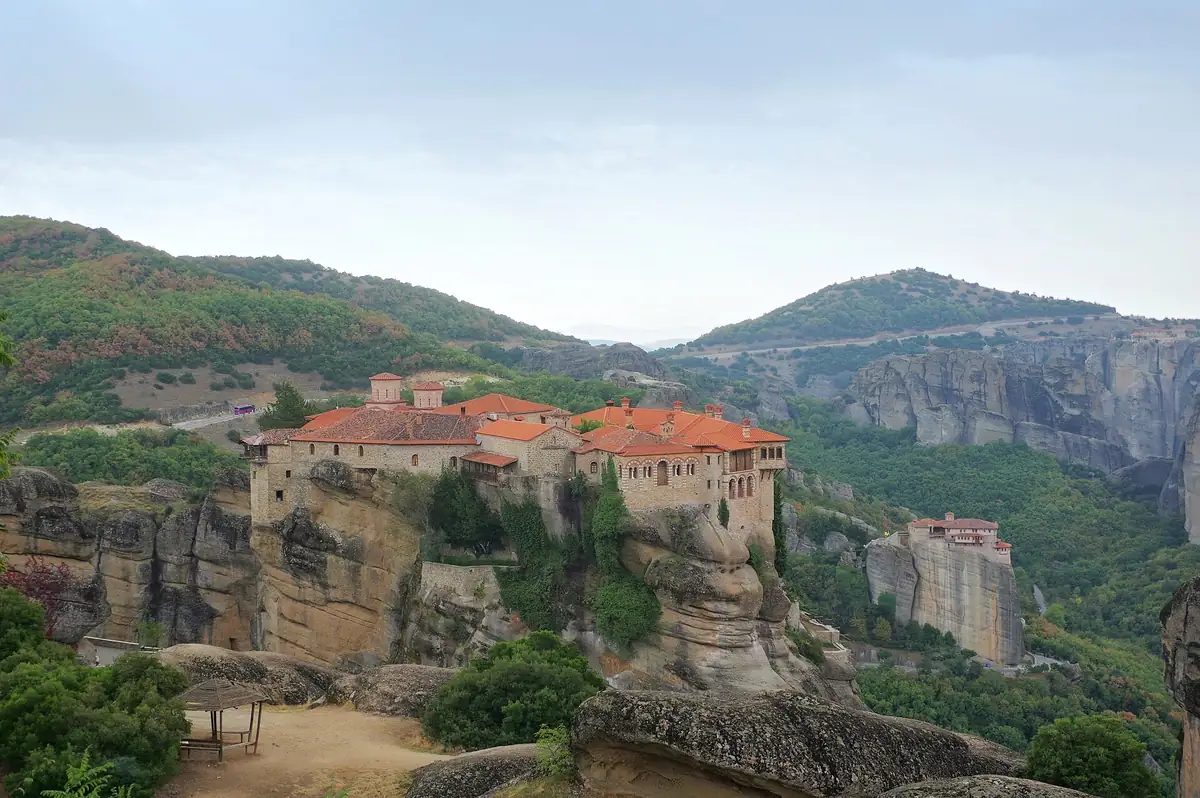
Athens, Meteora & Delphi, then Santorini
Athens with a guide, the monasteries of Meteora, the oracle at Delphi, and the caldera to finish.
Up to 16 · 30s, 40s and early 50s
See the trip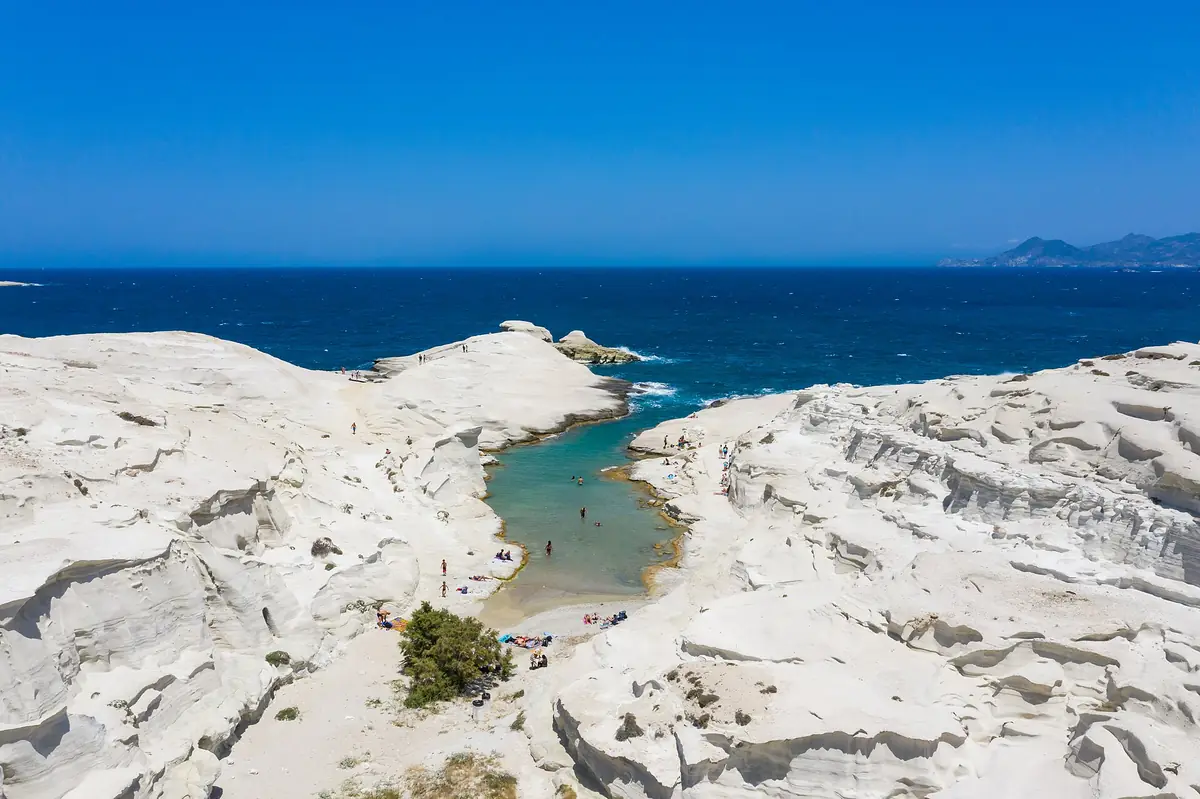
Naxos, Paros & Milos, then Santorini
Three Cycladic islands that most itineraries skip, by ferry, with Santorini for the finale.
Up to 16 · 30s, 40s and early 50s
See the trip