
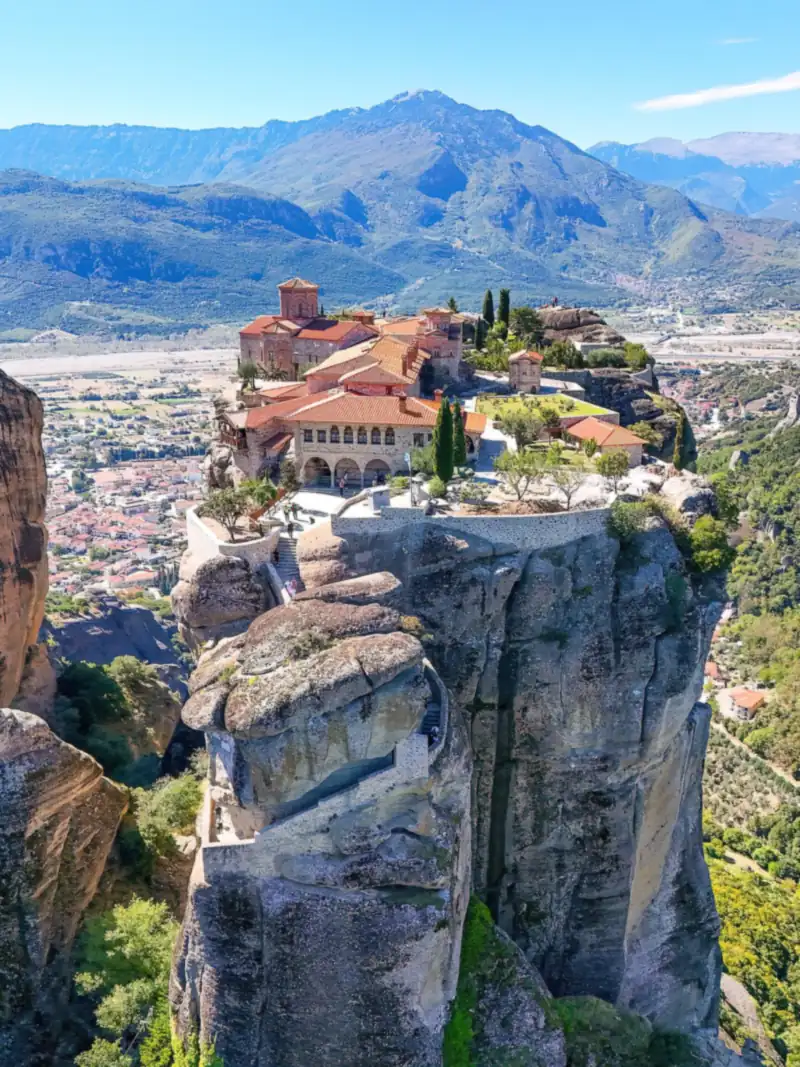
Meteora, where monasteries sit on top of the rocks
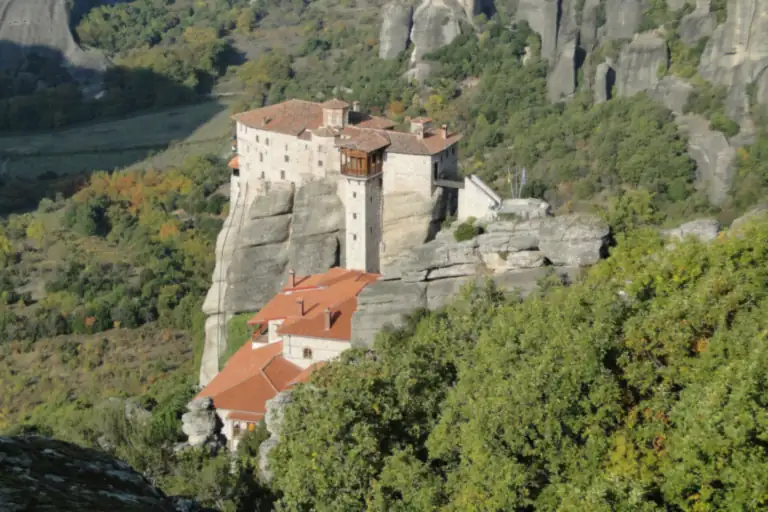
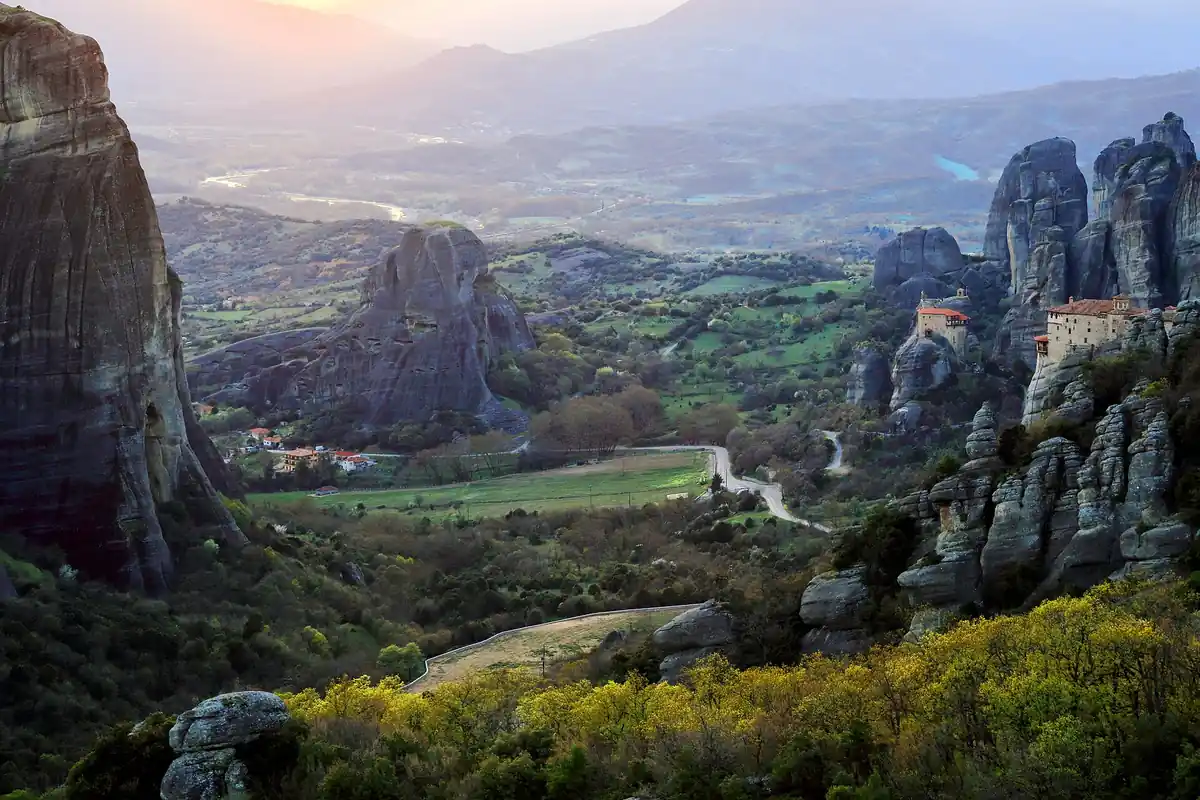
Six monasteries still work on top of sandstone pillars that rise hundreds of meters above the plain of Thessaly, built from the 14th century by monks who hauled everything up by rope and net. It is the one place in Greece where even people who do everything on their own say: take a guide, and stay the night. We agree on both.
With a licensed guide
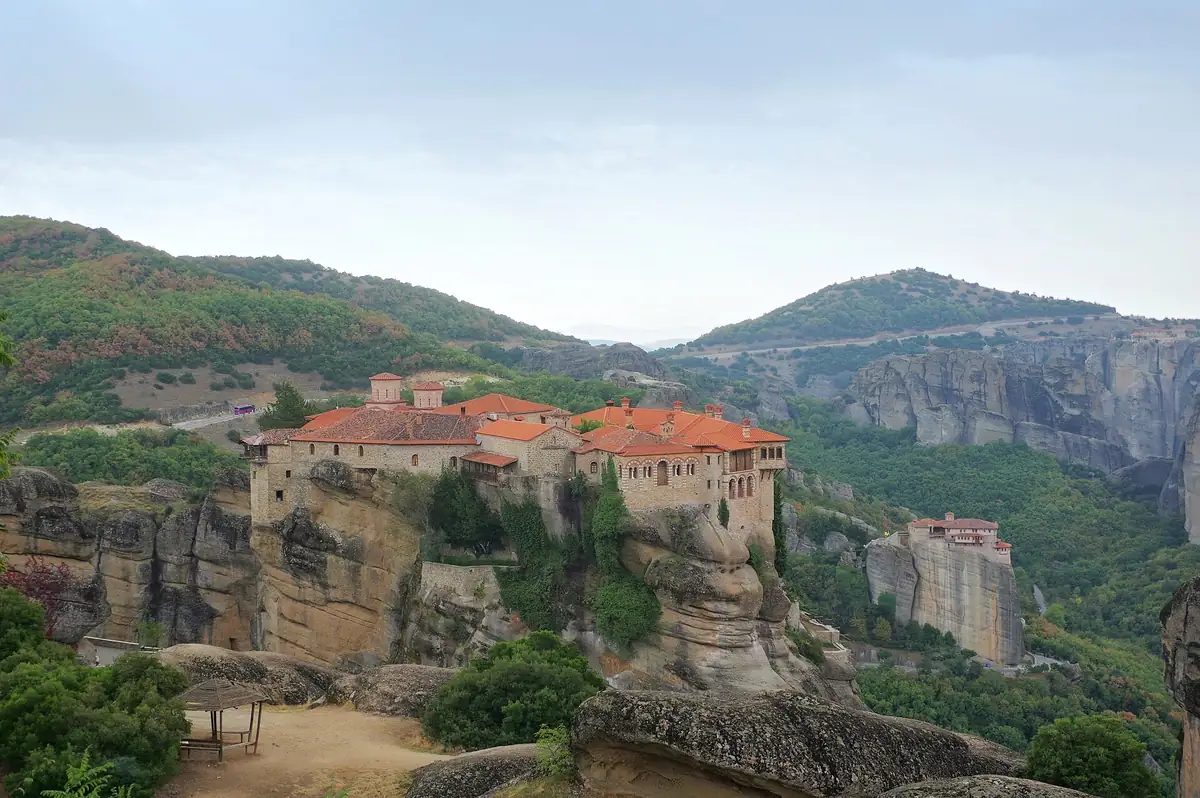
The monasteries are small inside, and the stories are in the details: the 16th-century frescoes in Varlaam, the ossuary of skulls at the Great Meteoron, the net and windlass that lifted monks and supplies until steps were cut into the rock in the 1920s. A licensed guide walks you through what the frescoes show and why hermits first climbed up here a thousand years ago. The guide also knows which monastery is closed on which day, and where the tour buses park at 11.
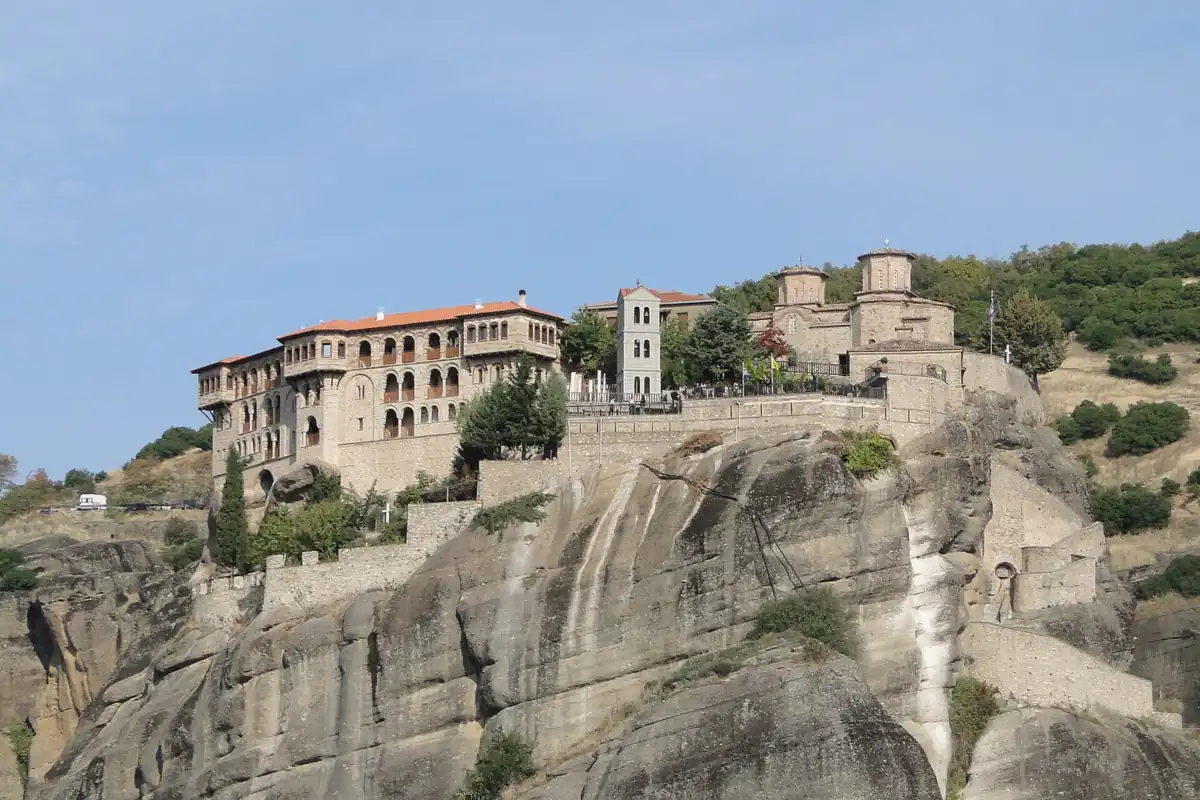
Two days at Meteora
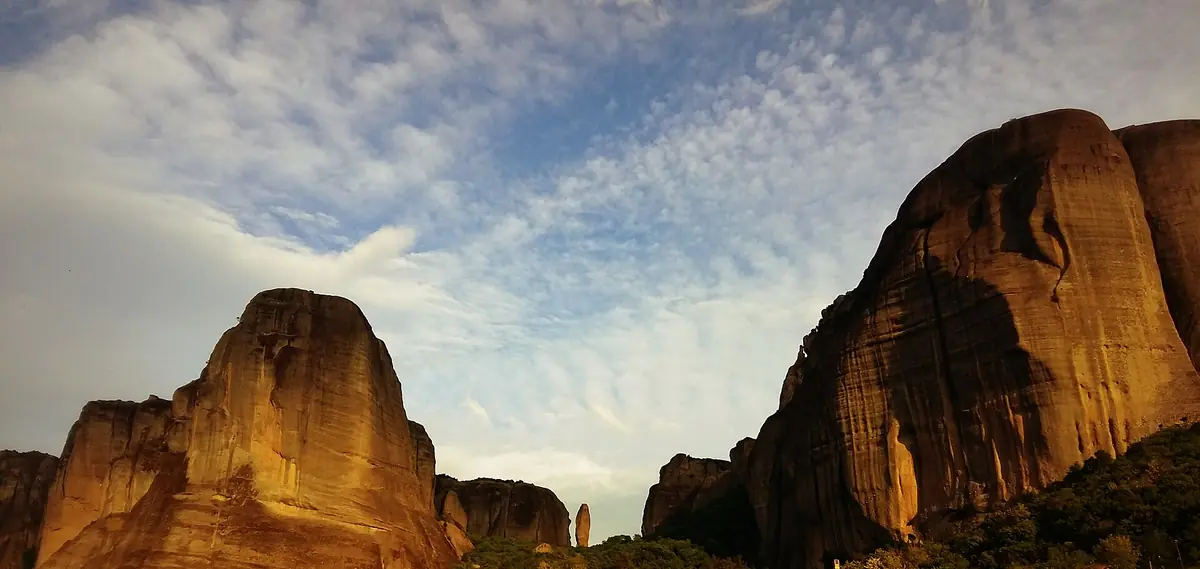
The afternoon you arrive, the light comes from the west and the rocks above Kastraki turn orange. That’s the hour for the viewpoint below Holy Trinity, the monastery that climbed into a Bond film in 1981. The next morning is for the monasteries themselves, two or three of them, slowly: knees and shoulders covered, wrap skirts handed out at the door, a courtyard with a view of the next pillar over. Lunch is in Kalambaka, the town that lives under the rocks. The second afternoon is a walk on the old monks’ paths between the pillars, or a café terrace and nothing at all. The program for each departure is published with its dates.
When to go
Year-round. Spring and fall give the clearest skies and the most comfortable walking. Summer is hot on the rock paths by noon. Winter sometimes puts snow on the pillars, which is its own reason to come. Each monastery closes one day a week, and winter hours are shorter.
How you get here
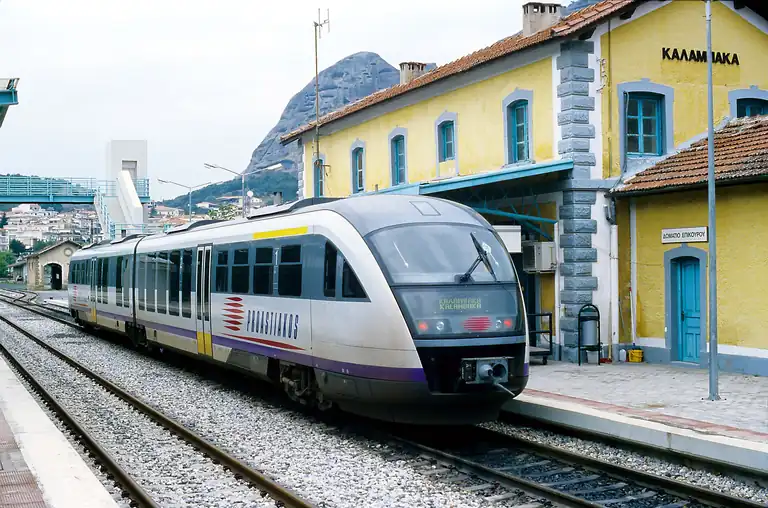
Meteora is about 350 km north of Athens: roughly 4 hours by road, or about 5 hours by train and the railway’s bus to Kalambaka, the town at the foot of the rocks, until the last stretch of line reopens. From Thessaloniki it’s about 3 hours by road, or by train to Paleofarsalos and bus from there. On our mainland trip, Meteora comes with Delphi, and the road between the two crosses the mountains of central Greece.
Questions
- Do I need to be fit?
- The monasteries have steps, from about 140 to around 300 depending on the one. St. Stephen is reached by a bridge, with almost none. Good shoes, a hat and water are enough.
- What’s the dress code?
- Knees and shoulders covered, for everyone. Women are given wrap skirts at the entrance; shorts on men are usually turned away.
- Is a day trip from Athens enough?
- It’s about 8 hours on a bus for 3 hours at the rocks. A night nearby gives you the evening light and the morning before the buses.
- Are the monasteries open every day?
- Each one closes on a different day of the week, so some are always open. The guide plans the visit around it.
- Can I take photos?
- Outside, as much as you like. Inside the churches, no.
Athens, Meteora & Delphi, then Santorini
Athens with a guide, the monasteries of Meteora, the oracle at Delphi, and the caldera to finish.
Up to 16 · 30s, 40s and early 50s
See the trip