
Paros, the island of marble and small harbors
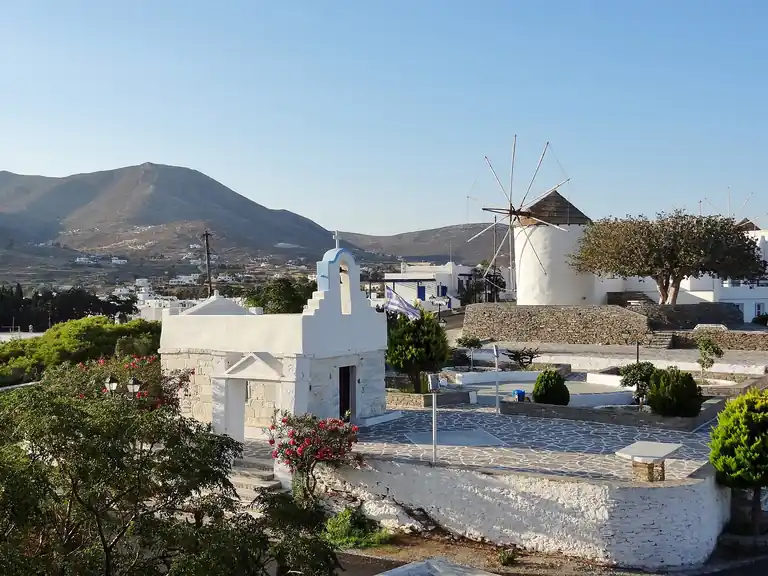
Paros sits in the middle of the Cyclades, a short ferry from Naxos. Its marble, white and faintly translucent, was the stone Greek sculptors asked for by name: the Venus de Milo and the Hermes of Praxiteles were carved from it. Today the island is better known for Naoussa, a fishing harbor where the tables stand on the quay between the boats, and for Parikia, the port town with a 4th-century church at the end of its lanes. It’s an island of whitewash, bougainvillea and two or three villages that deserve a whole afternoon each.
With a licensed guide
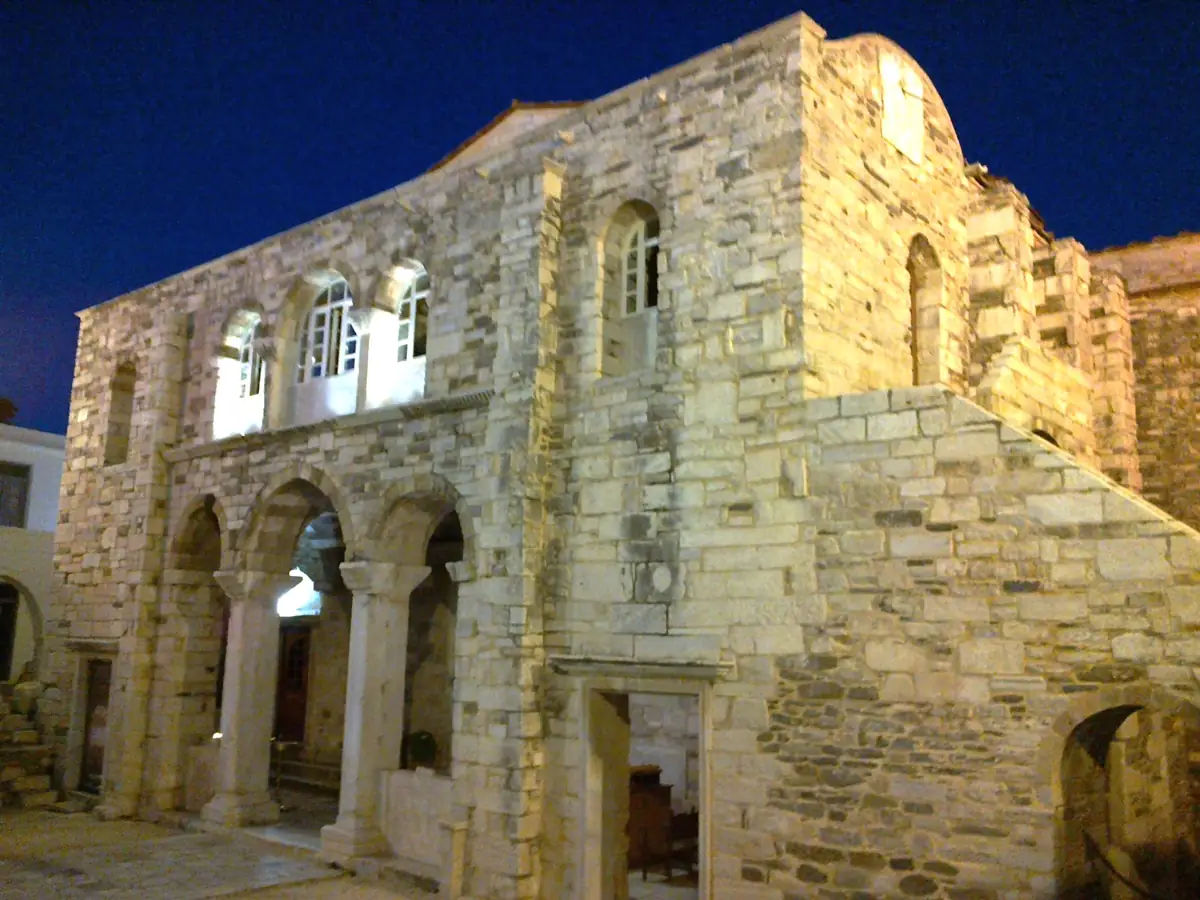
Paros doesn’t have one big ruin. It has a thousand years layered into its towns. A licensed guide walks you through Panagia Ekatontapiliani in Parikia, the church of a hundred doors, founded in the 4th century, rebuilt in the 6th under Justinian and still in use. The Frankish castle above the harbor was built in the 13th century out of an ancient temple, column drums and all, and it’s the kind of thing you’d walk past without someone pointing at it. The archaeological museum holds part of the Parian Chronicle, a timeline of Greek history carved in marble in 264 BC. The ancient quarries at Marathi, where the stone was cut in tunnels by lamplight, are a short drive inland. Which sites are on the program is written with each departure.
Two days on Paros
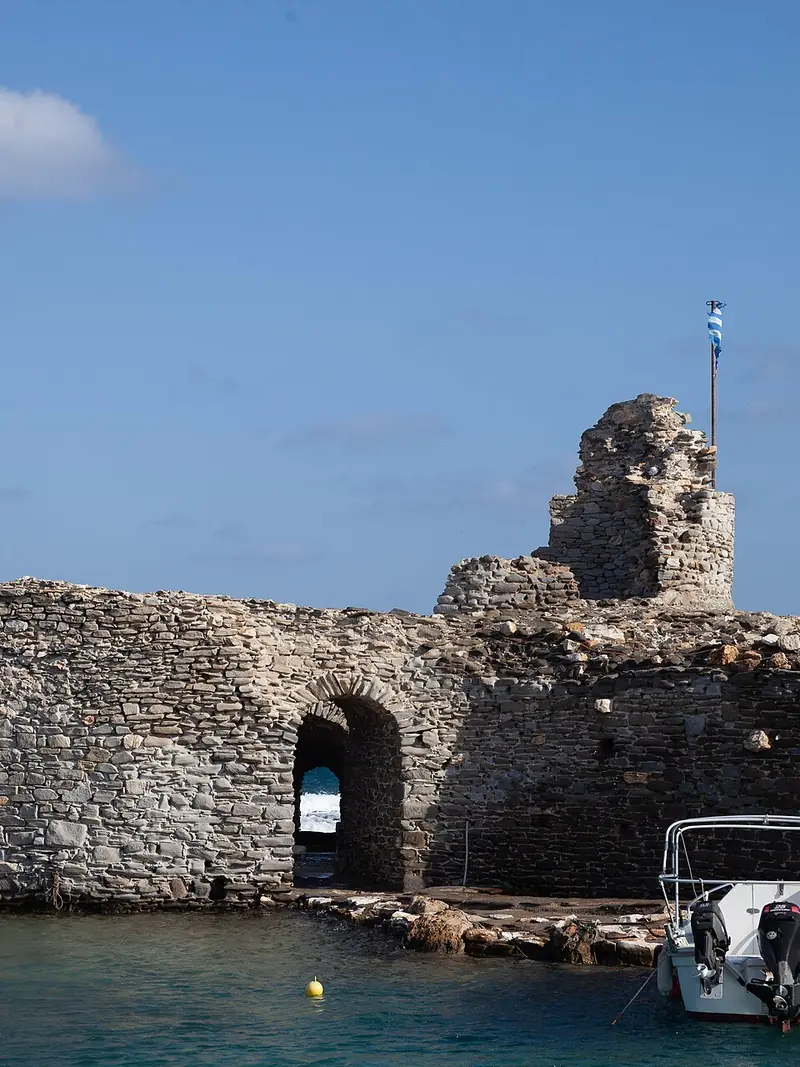
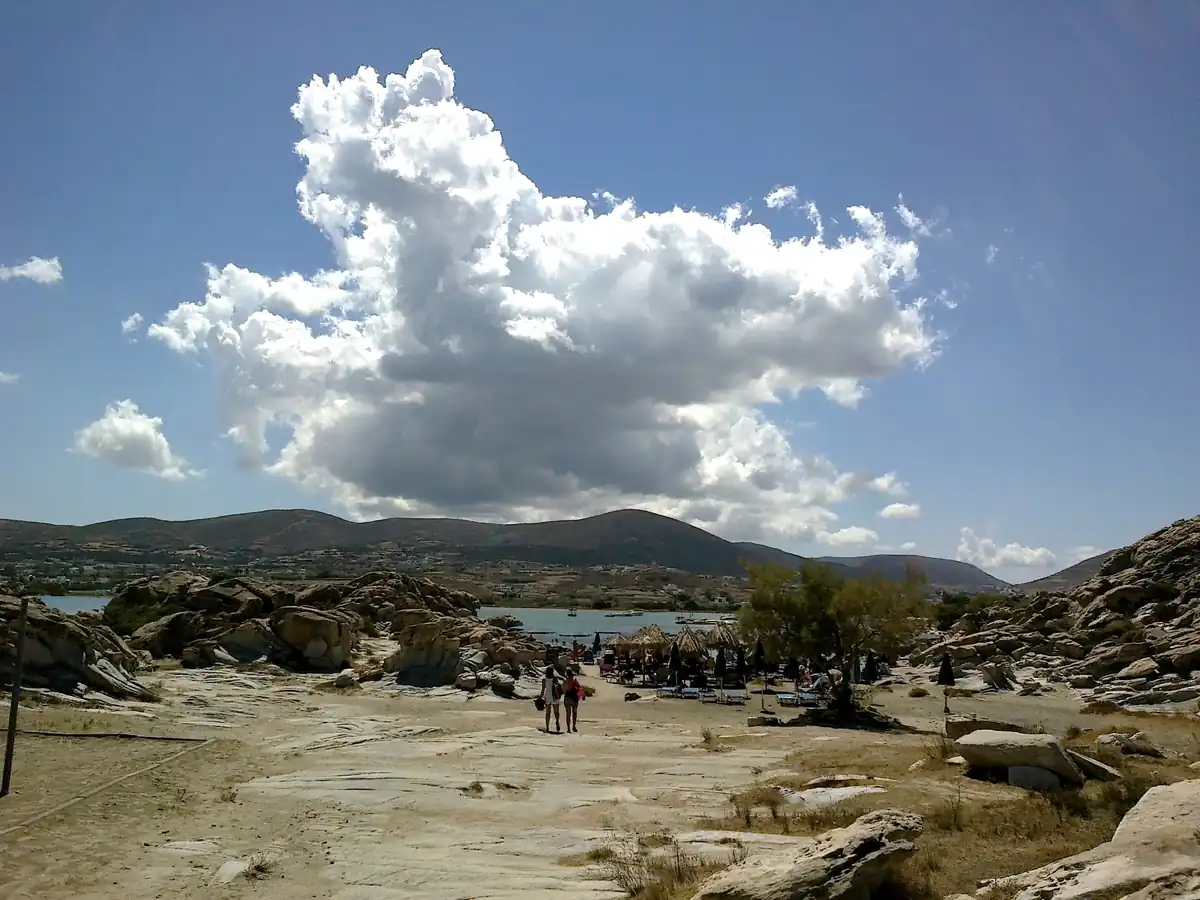
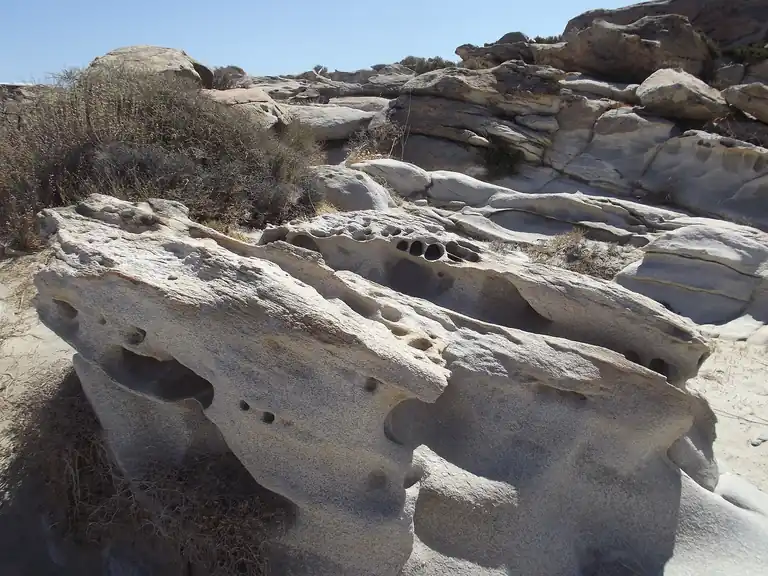
The ferry from Naxos takes under an hour, and Parikia starts at the dock: the church first, then the lanes behind the harbor up to the castle wall with the column drums built into it. In the afternoon, Lefkes, the old capital, some 300 meters up in the hills: white lanes, marble underfoot and a view down to Naxos across the strait. The evening belongs to Naoussa. The harbor is tiny, the boats nudge the tables, the ruined Venetian fort sits in the water at the harbor mouth, and the lanes behind it are white and blue and full of people eating late. The next day is the sea: Kolymbithres across the bay from Naoussa, where granite boulders have been worn smooth, or the quieter east coast at Molos and Santa Maria. The program for each departure is published with its dates.
When to go
The sea is warm from late May to October. The meltemi blows in July and August and fills Chrissi Akti, on the southeast coast, with windsurfers. June, September and early October are the months for walking the villages at noon and still wanting lunch.
How you get here
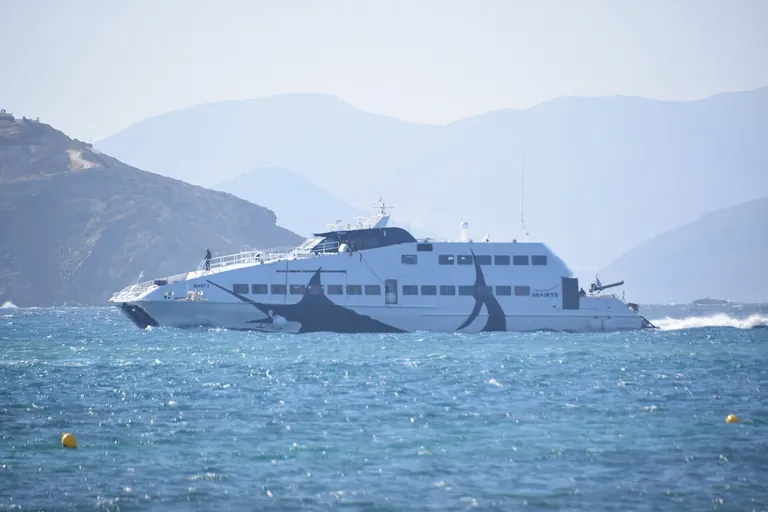
Paros is under an hour from Naxos by ferry, 3 to 4 hours from Piraeus on the fast boats and 4 to 5 on the conventional ones. It has a small airport with 40-minute flights from Athens. From Paros, Milos is about 2 hours by fast ferry, and that’s the direction our Cyclades trip takes. Exact times and the boats we use are published with each departure.
Questions
- Is Paros the same as Naxos?
- Neighbors, not twins. Naxos is big, green and farmed; Paros is smaller, whiter and built around harbors and lanes. Seeing both with one short ferry between them is the point of pairing them.
- Where does the group stay?
- In a central hotel, named before you pay, like every stop on our trips. Which town it’s in is written on the trip page.
- Can I rent a bike or a scooter?
- Rental shops are in Parikia and Naoussa. If the program has free time on Paros, that’s the moment, and the trip manager will point you to a shop.
- Is there a boat trip?
- Boats leave Parikia and Naoussa for Antiparos, the small island across the strait with a cave of stalactites, and for beaches you can’t reach by road. Whether a boat day is in the price is written on the trip page.
- Is Paros good for swimming?
- Yes, and the beaches are close: Kolymbithres and Monastiri in the bay of Naoussa, Chrissi Akti and Santa Maria on the other side, and small coves between them.
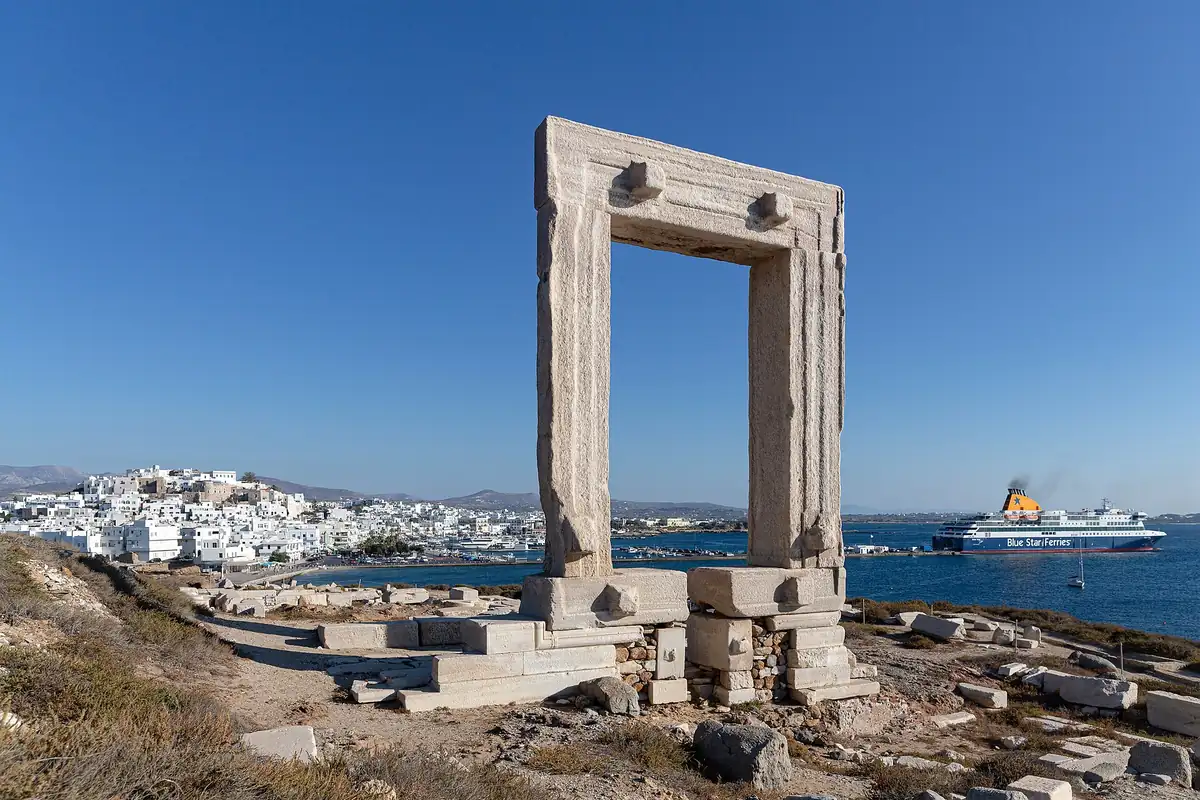
Naxos, Paros & Milos, then Santorini
Three Cycladic islands that most itineraries skip, by ferry, with Santorini for the finale.
Up to 16 · 30s, 40s and early 50s
See the trip