
Athens to Meteora: how to get there and how long to stay
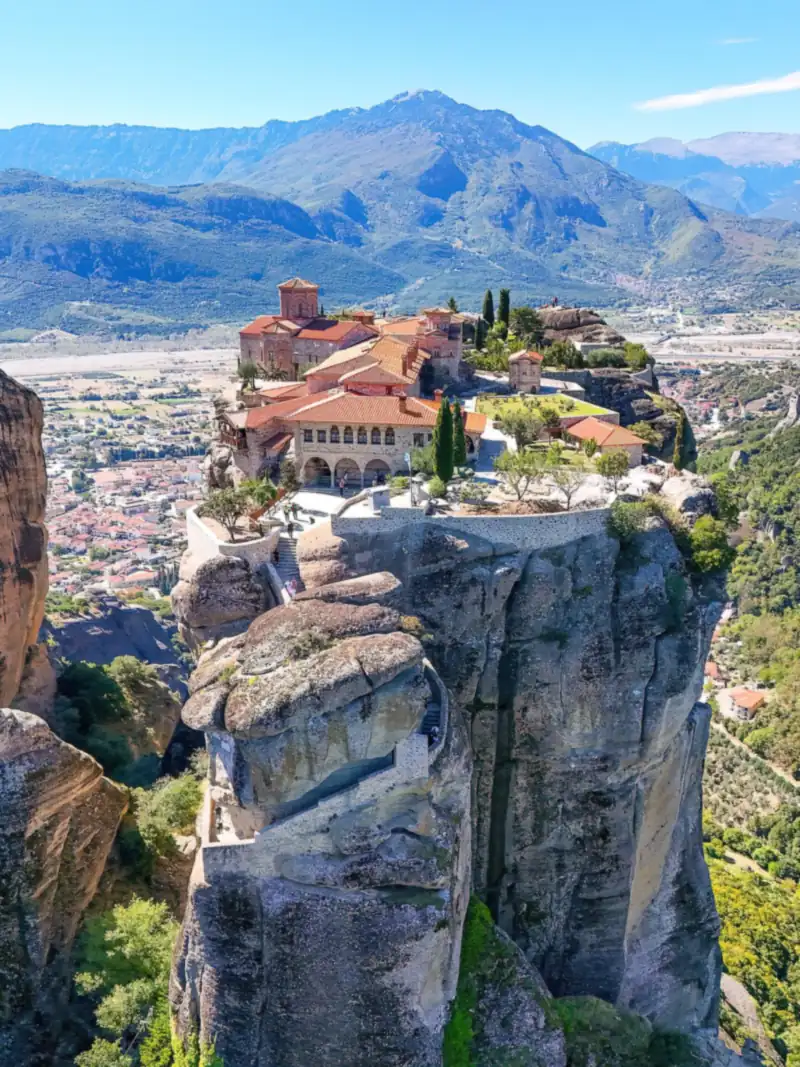
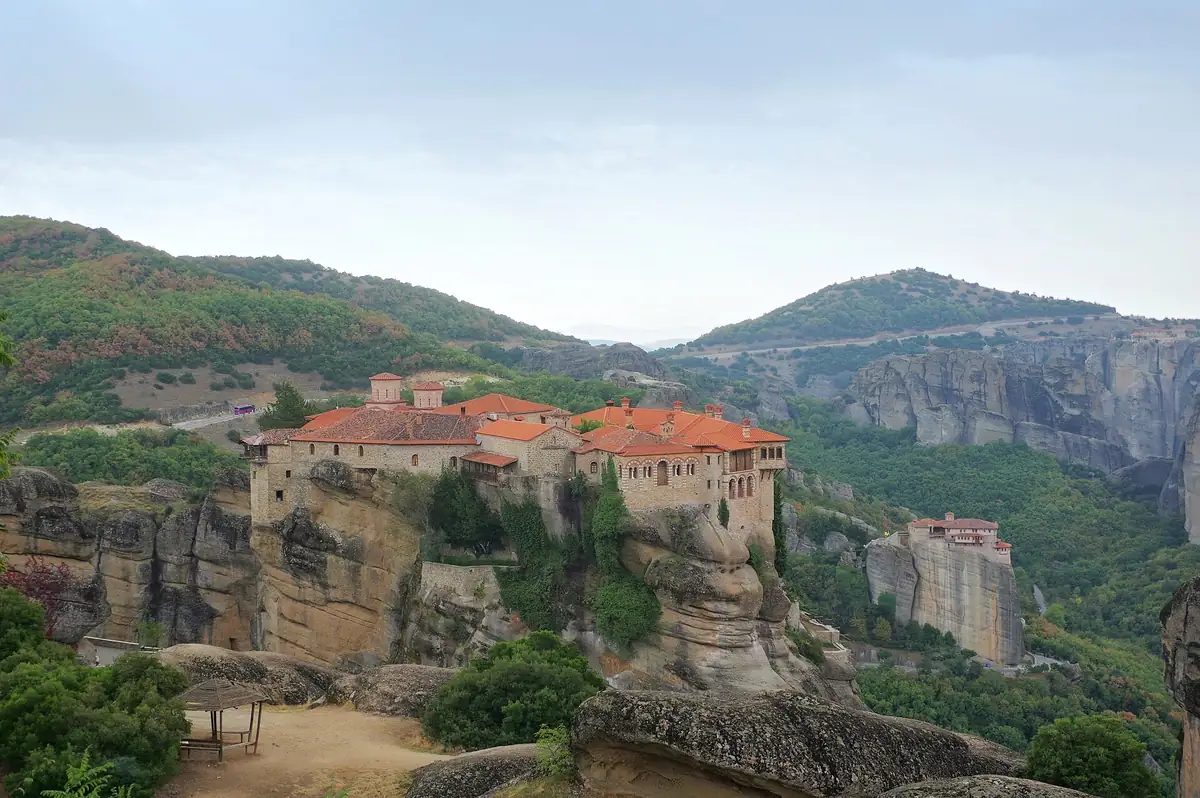
Meteora is 350 km north of Athens, and the six monasteries sit on rock pillars above Kalambaka, a small town on the edge of the plain of Thessaly. You have three ways to get there: the train, the road, or a day tour that does both directions in one go. Here is what each one costs you in hours, and what we’d do.
The short answer
Take the train or drive up in the morning, sleep one night in Kalambaka or Kastraki, see the monasteries the next morning with a guide, and leave after lunch. A day trip from Athens is possible. It’s also about 8 hours on a bus for 3 hours at the rocks.
By train and bus: about 5 hours
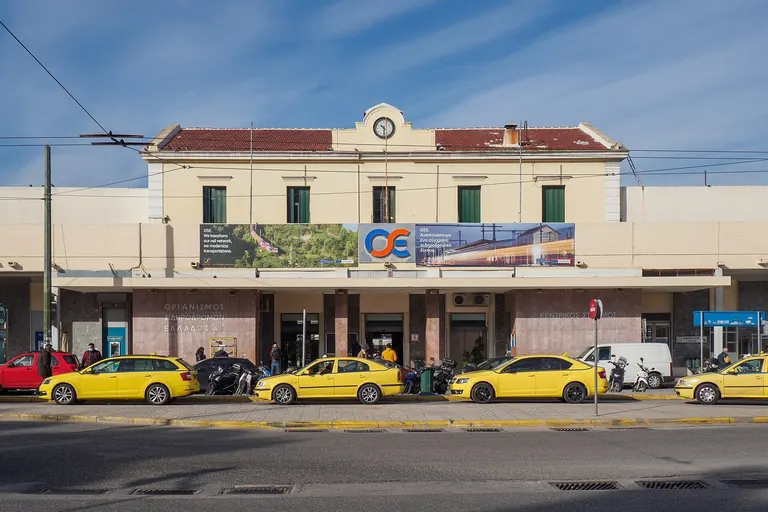
Trains leave Athens from Larissa station, on the red metro line. Since the floods of 2023 there has been no direct train to Kalambaka: you take the Athens to Thessaloniki intercity as far as Paleofarsalos, a junction in the Thessalian plain, and the railway’s own bus for the last stretch, around 5 hours in all. The line is being rebuilt and trains are expected back on it, but no date has been announced. Book the train and the bus connection together on the Hellenic Train site, a few days ahead in summer. Kalambaka station is at the edge of town, a 10- to 15-minute walk from the center with the rocks in view the whole way. The ride is a good one: out of Athens past Thebes, along the mountains of central Greece, and into the flat plain where the rocks appear out of nowhere.
By road: about 4 hours
By car it’s the A1 highway north, then west across the plain to Trikala and Kalambaka. Count on 4 hours without stops, with tolls on the highway. From Thessaloniki it’s shorter: about 230 km and 3 hours by road, or by train to Paleofarsalos and the railway’s bus from there, about 3 hours in all.
If you’re driving from Athens, Delphi is on the way: 2.5 to 3 hours from Athens to Delphi, then 3.5 to 4 hours across the mountains to Kalambaka. That’s the route our mainland trip takes, with a night at each end of it.
The day trip from Athens
Bus tours leave Athens around 7 in the morning and are back after 9 at night. You get about 3 hours at Meteora, usually two monasteries and a viewpoint, and you miss the two things that make the place: the evening light on the rocks and the morning before the buses. If a day is all you have, go. If you can find one night, don’t.
How long to stay
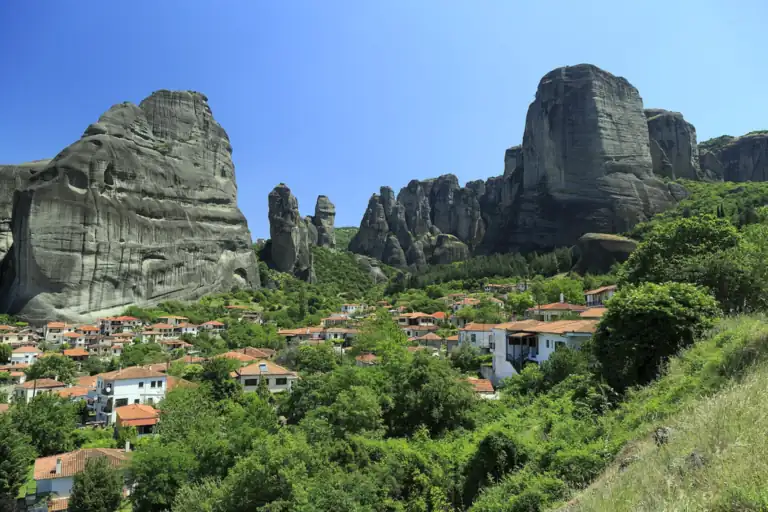
One night is enough to see Meteora properly; two if you want to walk the paths between the rocks. Sleep in Kalambaka, the town with the train station and the restaurants, or in Kastraki, the village right under the pillars where the view from the terrace is the point. Both are a few minutes’ drive from the first monastery.
The six monasteries
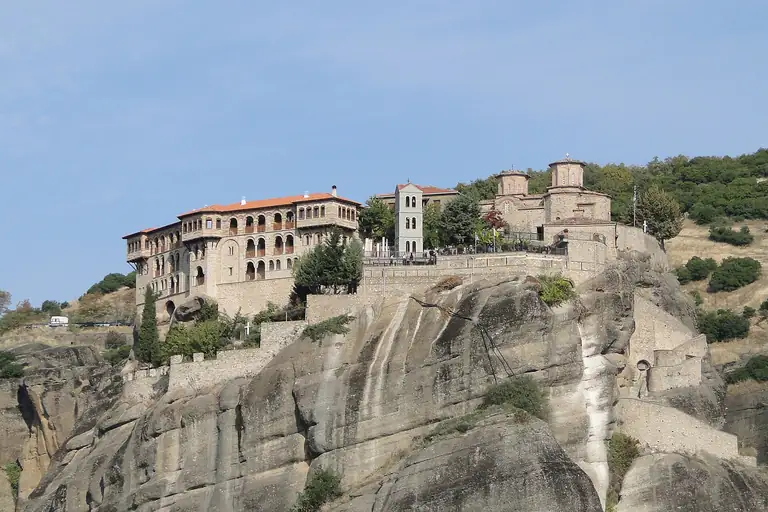
Twenty-four monasteries stood on these rocks in the 16th century. Six are still working, and all six take visitors.
- Great Meteoron, the oldest and the highest, founded in the 14th century, with the largest museum and the ossuary of monks’ skulls. About 300 steps.
- Varlaam, next to it, with 16th-century frescoes and the windlass and net that lifted people and supplies before the steps were cut in the 1920s. About 195 steps.
- Rousanou, a nunnery on a narrow pillar reached by a small bridge, one of the easier climbs.
- St. Nicholas Anapausas, small and steep, with frescoes by the Cretan painter Theophanes from the 1520s.
- Holy Trinity, on the most isolated rock, in the 1981 Bond film For Your Eyes Only, reached by about 140 steps down and up again.
- St. Stephen, a nunnery reached by a bridge with almost no steps, and the one for anyone with bad knees.
Each monastery closes one day a week, and the days differ, so from April to October at least four are always open. As of 2026: Great Meteoron on Tuesdays, Varlaam on Fridays, Rousanou on Wednesdays, St. Nicholas on Fridays, Holy Trinity on Thursdays and St. Stephen on Mondays. Winter hours are shorter and some close a second day. Entrance is a few euros per monastery, paid in cash at the door.
Dress code and what to bring
Knees and shoulders covered, for everyone. Women are handed wrap skirts at the door whether they’re wearing pants or not; men in shorts are turned away. Bring water, a hat and shoes with grip: the steps are stone and worn. Photos are fine outside and not allowed inside the churches.
Walking between the rocks
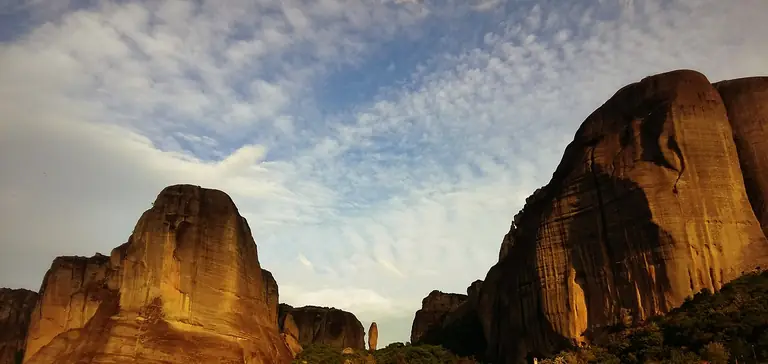
The old paths the monks used still connect Kastraki with the monasteries. The classic walk climbs from Kastraki through the woods to the saddle below Great Meteoron and Varlaam in about an hour; another path leads up from Kalambaka to Holy Trinity in under an hour. They are marked, shaded for part of the way and steep in places.
When to go
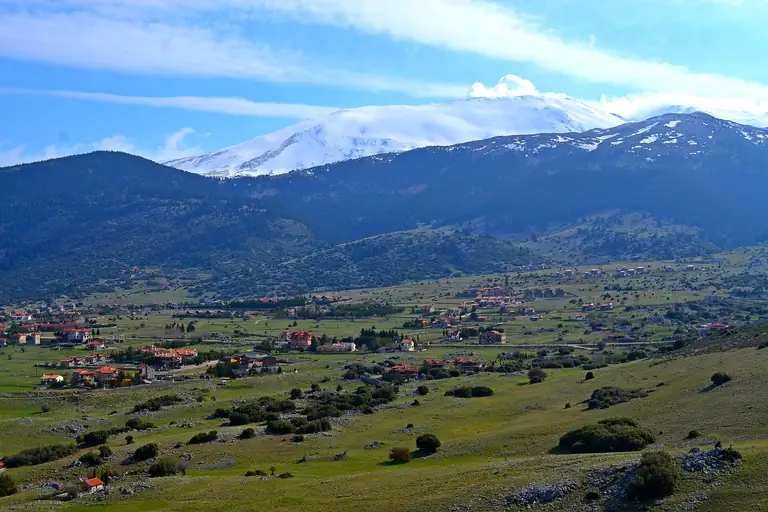
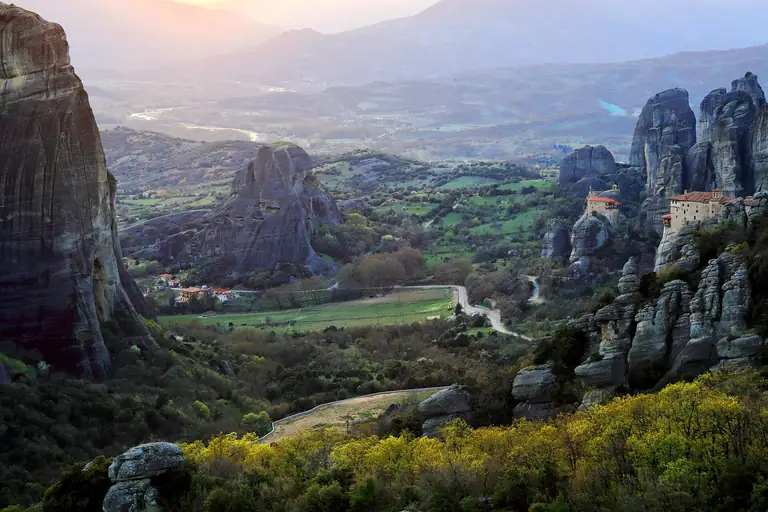
Meteora works year-round, and each season changes what you get. Spring and fall have clear skies, comfortable walking and the longer visiting hours. Summer is hot on the rock paths by noon and busiest with day tours from Athens, so go to the monasteries at opening and walk in the evening. Winter puts snow on the pillars some years, the hours are shorter, more monasteries close a second day, and the town is nearly empty. It’s the quietest time to see the place, if you dress for it.
Tickets and hours
Each monastery sells its own ticket at the door. There is no combined ticket and no online booking. Summer hours are longer, winter hours shorter, and last entry is before closing time. The schedules change from year to year, so check the current ones in the week you go, or leave it to the guide.
Why with a guide
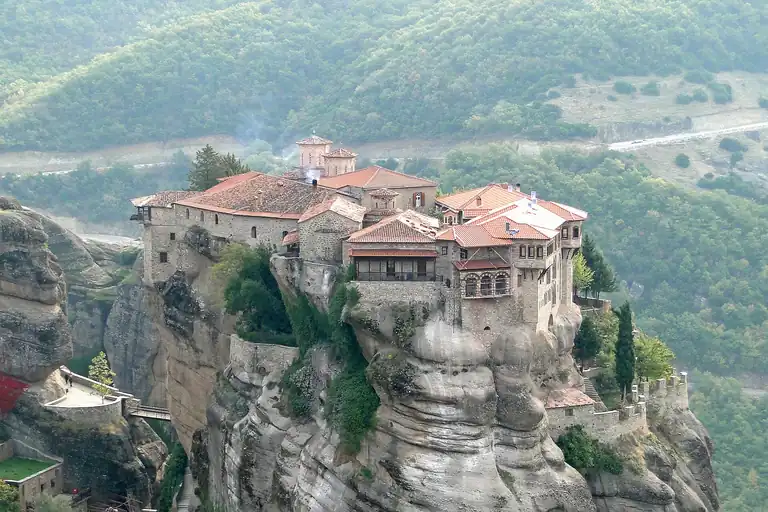
The monasteries are small and the stories are in details you’d walk past: which fresco shows what, why hermits climbed up here a thousand years ago, how a 16th-century monk got a church built on a pillar with no road to it. A licensed guide also knows the closing days, the hours, and where the tour buses park at 11, so you’re somewhere else at 11. On our mainland trip, Meteora comes with an overnight nearby, a licensed guide at the monasteries, and the road from Delphi across central Greece.
Athens, Meteora & Delphi, then Santorini
Athens with a guide, the monasteries of Meteora, the oracle at Delphi, and the caldera to finish.
Up to 16 · 30s, 40s and early 50s
See the trip